Arakan
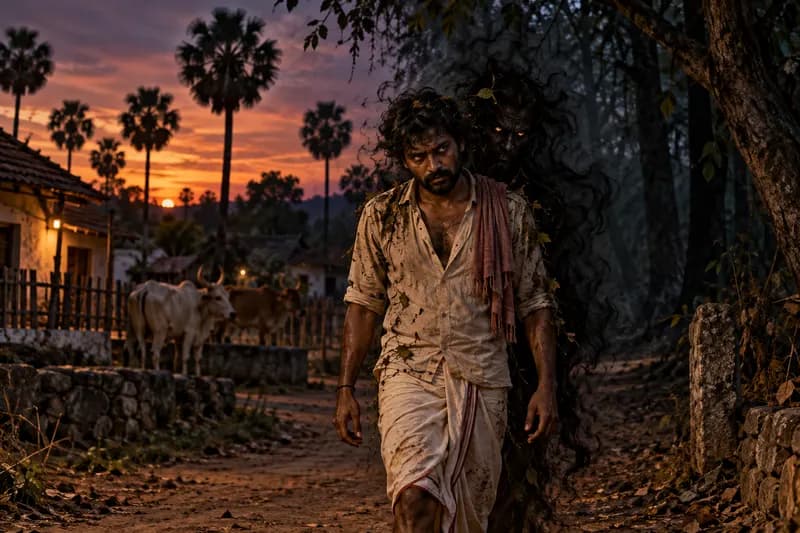
He was a good man. Everyone said so. Then one night he walked into the forest and came back as something else. His eyes were the same. Everything behind them was not.
- What Is an Arakan?
- Why the Arakan Is Terrifying
- Origin — How It Came to Exist
- Appearance & Manifestation
- The Farmer of Dindigul
- The Rules — How to Survive
- What They Don't Tell You
- What Does the Arakan Want?
- You're Most at Risk If...
- Offerings & Appeasement
- The Healer
- What If You Dream of an Arakan?
- The Arakan in Art History
- Cross-Regional Patterns
- In Culture — Movies, Books, Games
- Is the Arakan Still Real?
- Expert & Academic Context
- If You Encounter an Arakan-Possessed Man
- Frequently Asked Questions
- Explore More
| Arakan | |
|---|---|
| Also Known As | Arakkan, Arakkhan, Asuran-type spirit, Peya Arakkan |
| Script | அரக்கன் (Tamil) |
| Pronunciation | AH-ruh-kuhn (அ-ரக்-கன்) |
| Region | Tamil Nadu; strongest in rural areas, forested regions, and villages near ancient temple sites |
| Category | Demonic Spirit / Possession Entity |
| Danger Level | Severe |
| Fear Method | Possession of men, inducing violence, erasure of personality, physical superhuman aggression |
| Warning Sign | Sudden personality change in a previously calm man; unusual physical strength; an aversion to temples and sacred spaces; eyes that look 'empty' or 'replaced' |
| First Documented | Tamil folk traditions (pre-literary); echoes in Sangam-era references to demonic possession; connections to Rakshasa mythology in Tamil adaptations of the Ramayana |
| Still Believed? | Yes — active belief in rural Tamil Nadu; specific rituals for Arakan possession are still performed at village temples; families report cases to local mantravadis |
| Deep Dives | Folk StoriesOrigin & HistoryIs It Real?In Pop CultureHow to SurviveDream Meaning |
| Related | Pishaach · Brahmarakshasa · Vetala · Bhut (Gond) · Mayana Kollai |
What Is an Arakan?
The Arakan (அரக்கன்) is a demonic possession spirit from Tamil Nadu folklore — an entity that enters the body of a living man and transforms him from the inside out. The word 'arakan' derives from 'arakkan,' the Tamil word for Rakshasa (demon), connecting this folk entity to the broader Indian mythological tradition of shape-shifting, violent demons. But while the Rakshasas of mythology are beings in their own right — with bodies, kingdoms, and identities — the Arakan of folk belief is a disembodied force that needs a human host to act.
What makes the Arakan uniquely terrifying is the specificity of its effect: it possesses men and makes them violent. Not randomly violent — purposefully, strategically, devastatingly violent. The possessed man retains his appearance, his voice, his memories. He looks exactly like himself. But his behavior inverts — the gentle become cruel, the patient become explosive, the loving become dangerous. The Arakan doesn't replace the man. It corrupts him — turning his strengths into weapons and his relationships into targets.
Why the Arakan Is Terrifying
INSTINCT EXPLOITED: THE FEAR THAT SOMEONE YOU LOVE IS NO LONGER THEMSELVES
Your husband comes home from the fields. He looks the same. Same face, same walk, same clothes. He sits at the table. He eats the food you cooked. He says the right words in the right order. But something is wrong.
You notice it first in his eyes. They look at you the way they always look at you — but the thing behind the looking is different. It's like watching a familiar house with a stranger standing in the window. The structure is right. The occupant is wrong.
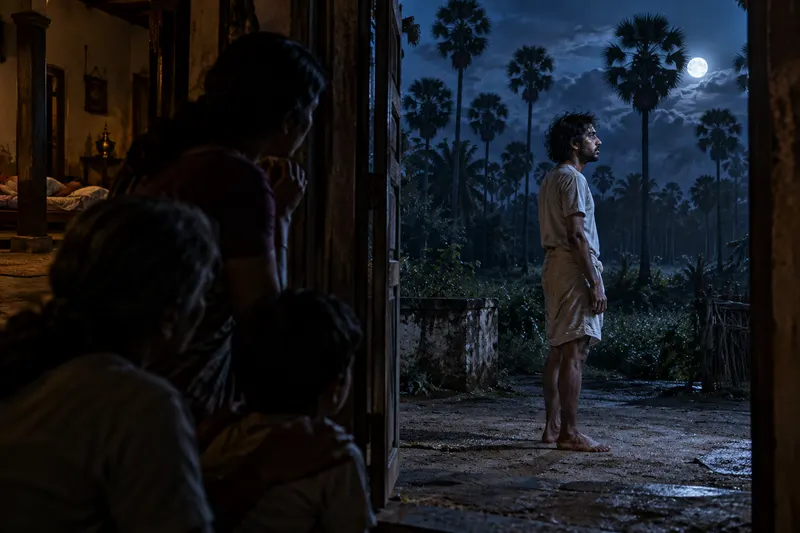
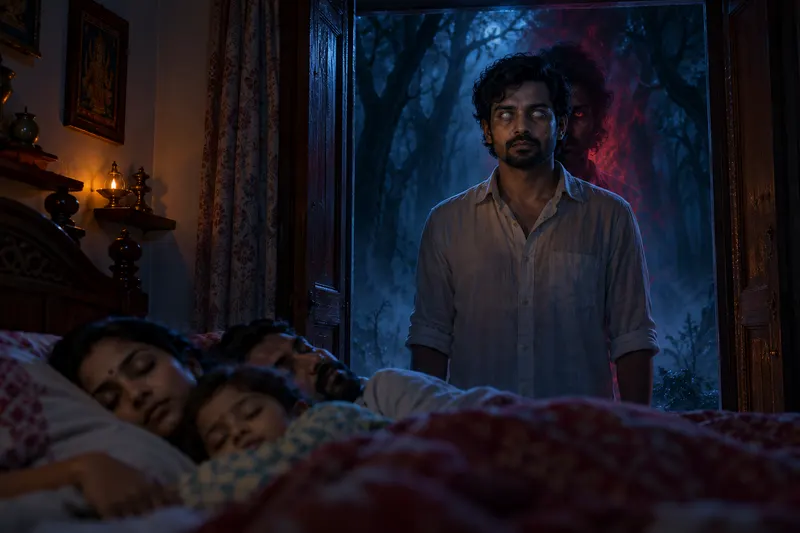
It starts small. He snaps at the children — he never snaps at the children. He breaks a cup and doesn't apologize — he always apologizes. He stands in the doorway of the house at 2 AM, staring at the forest, and when you ask him what he's looking at, he says 'nothing' in a voice that sounds like his voice played on a broken instrument.
Then it escalates. He hits you. He has never hit you. Not once in twelve years. But tonight his hand moves before his face changes expression, and the blow comes from somewhere deeper than anger — from a place that has no name and no negotiation. You look at him and he looks at you and for one second you see it: behind his eyes, something else is looking out. Something that knows your name but doesn't know what the name means.
The Arakan doesn't announce itself. It doesn't make the walls bleed or the lights flicker. It moves into a man the way a tenant moves into a house — quietly, gradually, rearranging the furniture of his personality until nothing is where it should be. By the time you realize the person you love has been replaced, the replacement has been living in your house for weeks.
This is why the Arakan is a danger level four: because the weapon it uses is someone you trust. The demon doesn't come to your door. It comes wearing your husband's face.
Origin — How It Came to Exist
The Rakshasa Connection
The Arakan is the folk descendant of the Rakshasas — the shape-shifting demons of Hindu mythology who feature prominently in the Ramayana and other epics. In the mythology, Rakshasas are powerful beings with their own civilization — Ravana's Lanka, the Rakshasa kingdoms. In Tamil folk belief, the concept was distilled and localized: the great mythological demons became smaller, meaner, more personal. The Arakan is what a Rakshasa becomes when stripped of its kingdom, its body, and its mythology — a raw force of violence looking for a vessel.
How It Possesses
Tamil folk tradition describes several entry points for Arakan possession: walking through dense forest alone at night (the forest is the Arakan's native habitat), sleeping under certain trees (specifically the Palmyra palm in some traditions), consuming food left at certain crossroads or cremation grounds (offerings meant for other spirits that the Arakan hijacks), or simply being in a state of extreme anger or emotional vulnerability. The Arakan is attracted to rage — it finds a man who is already angry and amplifies that anger a thousandfold.
Why Men Specifically
The Arakan possesses men almost exclusively. In the Tamil folk tradition, this specificity has two explanations: first, the Arakan is a masculine entity — its energy is compatible with male bodies in a way it isn't with female ones. Second, and more subversively, the Arakan represents the violence that already exists within men, given supernatural permission to express itself. It doesn't create violence from nothing — it unlocks what is already there and removes every restraint.
The Forest Origin
The Arakan is fundamentally a forest entity. Tamil Nadu's dense forests — the Western Ghats, the scrublands of the interior — are its territory. In villages at the forest edge, the Arakan is a constant background threat, the way a predator animal is a constant background threat. You don't go into the forest after dark. You don't go alone. You don't go angry. If you break these rules, you might come back as yourself. Or you might come back as a vessel.
Connection to Asuric Forces
In Tamil Hindu theology, the Arakan belongs to the 'asuric' (demonic) category of forces — opposed to 'daivic' (divine) forces. This is not evil in the Western sense but rather a cosmic imbalance — the Arakan represents entropy, destruction, the tearing-down force that opposes creation. When it possesses a man, it is not punishing him. It is using him as a tool to create chaos, to unravel the order of family, community, and village life.
Appearance & Manifestation
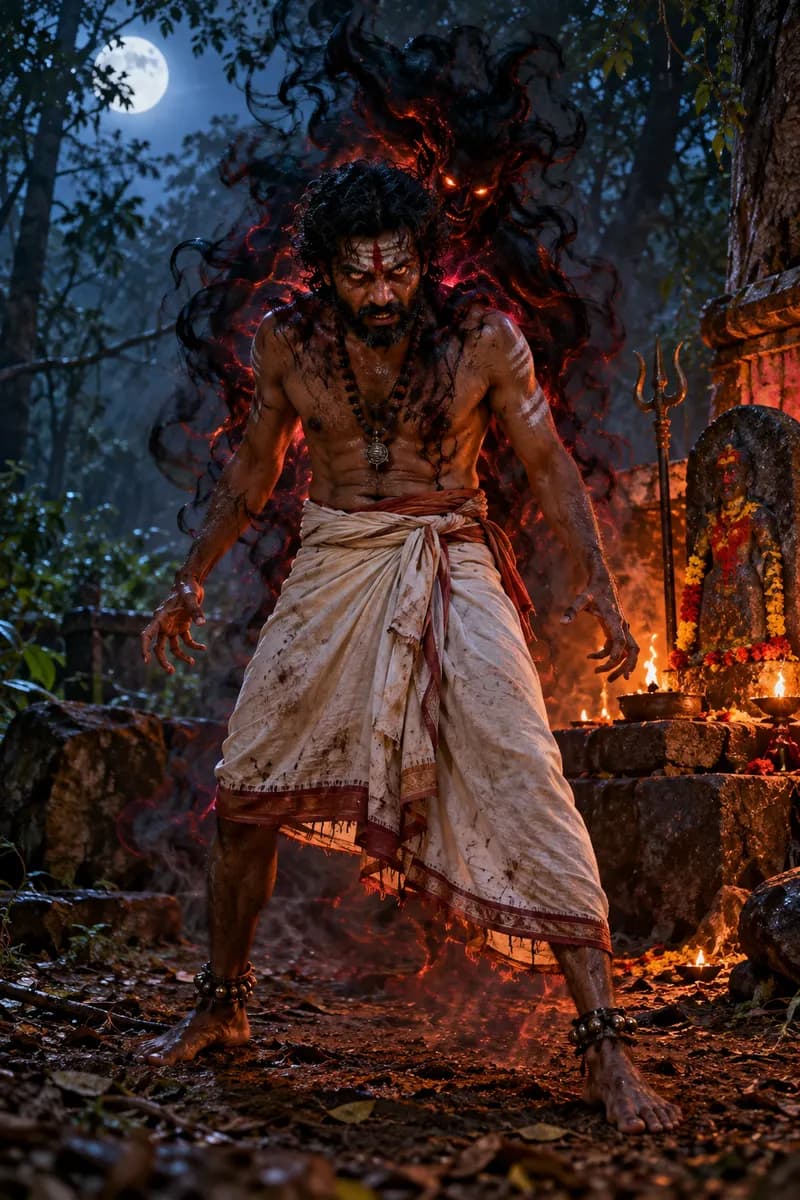
| 👁 Sight | The Arakan has no independent visible form — it manifests only through the body it possesses. The possessed man looks normal at first glance. On closer inspection: eyes that don't blink at normal intervals, muscles that seem tensed beyond what the man's build should allow, and — in advanced possession — a reddish cast to the skin, as if the blood is running hotter than it should. |
| 🔊 Sound | The possessed man's voice drops — sometimes slightly, sometimes dramatically. He may speak in a dialect or register of Tamil that he doesn't normally use. In full possession, the voice becomes a growl, and the man may produce sounds that the human vocal cord shouldn't be able to make — a deep, vibrating bass that feels like it comes from the chest rather than the throat. |
| 🍃 Smell | A smell of raw meat and forest soil — damp earth, decomposing leaves, and something animal underneath. The possessed man may smell differently than usual, even if he has bathed. The scent is strongest during episodes of violence and weakest when the man is temporarily calm. |
| ❄ Temperature | The possessed man runs hot — noticeably warmer to the touch than normal. His skin feels feverish even when he shows no other signs of illness. Rooms he occupies feel stuffy, overheated, the air thick and oppressive. This heat intensifies during violent episodes. |
| 🌑 Time | The Arakan is most active at night — possession symptoms intensify after sundown and peak between midnight and 3 AM. The possessed man may be relatively normal during daylight hours, only to transform as darkness falls. New moon nights (Amavasya) are the worst — the Arakan draws power from the absence of light. |
| 🏚 Habitat | Dense forests, Palmyra palm groves, crossroads at the forest edge, and — once possession is established — wherever the possessed man is. The Arakan has no fixed abode of its own. It lives inside its host. The forest is where it hunts for hosts. The home is where it does its damage. |
The Farmer of Dindigul
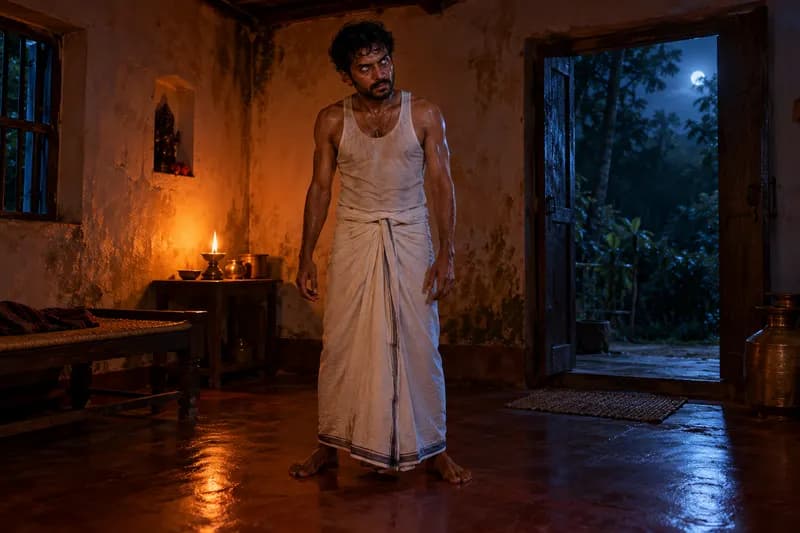
In the hills near Dindigul, there was a farmer named Selvam who was known in four villages for two things: his temper and his decency. He had a fierce temper — the kind that flared hot and burned out fast — but he was a decent man underneath it. He never hit his wife. He never harmed his children. He shouted, yes, but shouting was all it was. His wife Lakshmi would wait for the storm to pass and then hand him his coffee, and he would drink it sheepishly, already regretting the noise.
One evening in November — the tail end of the northeast monsoon — Selvam went to check on his cattle at the edge of the forest. The cattle had been restless for three days, refusing to graze near the treeline. Selvam went alone, despite Lakshmi telling him to take his brother. 'For what?' he said. 'It's my cattle and my land.'
He was gone for two hours. When he came back, the cattle were fine. Selvam was not.
Lakshmi noticed it that night. He sat at dinner and ate with his hands — he always ate with his hands — but his grip was wrong. He held the rice ball too tightly, pressing it until the grains crumbled. He looked at the children and didn't smile. He looked at Lakshmi and she felt, for the first time in their marriage, that she was being looked at by a stranger.
Over the next week, it got worse. Selvam stopped sleeping. He stood at the door at night, facing the forest, breathing in a slow rhythm that didn't match any human resting pattern. He stopped speaking unless spoken to, and when he spoke, his Tamil was slightly different — older, thicker, as if the words were being pulled from deeper in his throat.
On the eighth day, he hit his eldest son. Not a slap — a blow that knocked the boy across the room and broke his arm. Lakshmi screamed. Selvam looked at her with no expression on his face and walked out of the house toward the forest.
The village mantravadi — an old man named Murugan — came that night. He took one look at Selvam, who had returned from the forest at dawn looking exhausted and confused, and said: 'Arakan. Forest-entered. Seven days in, maybe eight. We can still get it out.'
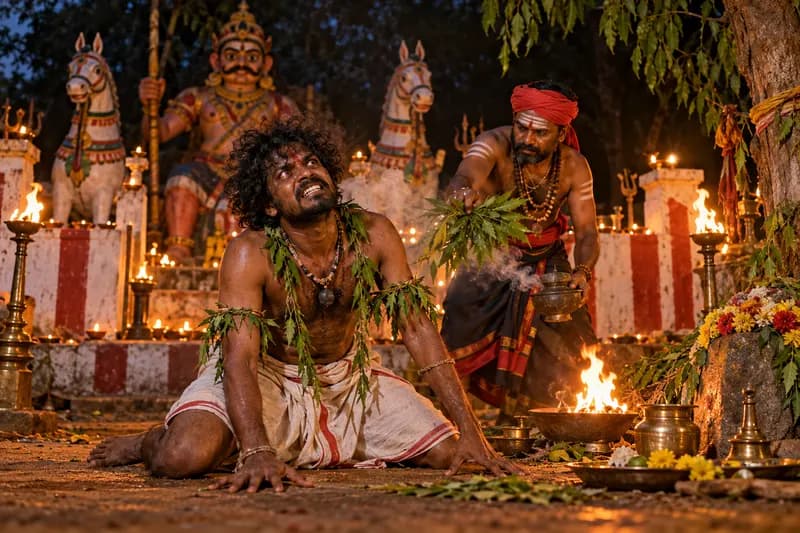
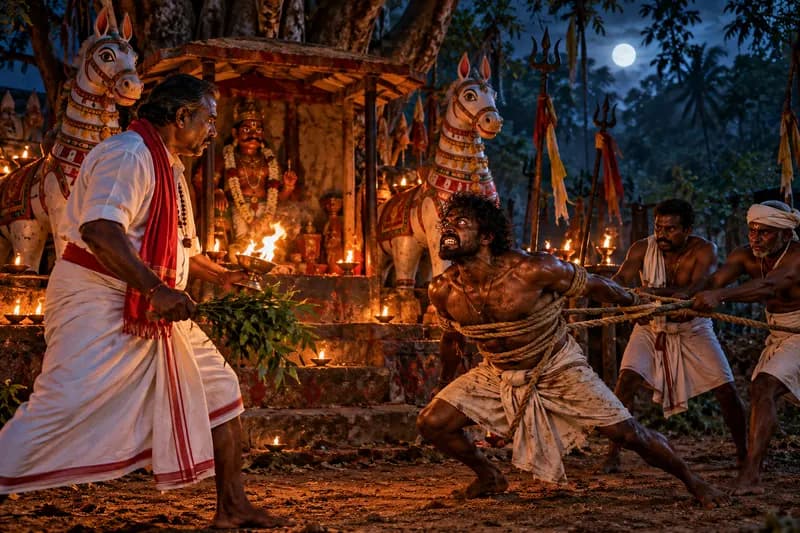
The ritual took three nights. They held it at the Ayyanar temple at the village boundary — the temple whose guardian figures faced the forest, keeping what was inside from coming out. Selvam was tied — not cruelly, but securely — because the Arakan would fight. And it did. On the second night, Selvam — a man of ordinary build — threw three men off him with a strength that didn't belong to his body. He growled in a voice that wasn't his. He looked at Murugan with eyes that were his own but empty of everything that made them Selvam's.
On the third night, Murugan used fire, ash, and neem. He chanted the names of the village guardians. He called the Arakan by its nature — not by a name, because it had no name, but by what it was: violence without form, hunger without body, the forest's teeth. He told it to leave. He made it leave.
Selvam collapsed. He slept for two days. When he woke up, he didn't remember anything after the evening he went to check on the cattle. He asked why his son's arm was in a sling. When they told him, he sat in the corner of the house and cried for an hour. He never went to the forest edge alone again.
The Rules — How to Survive
☠ WARNING ☠
Seven rules for preventing and surviving Arakan possession
- Never enter dense forest alone after dark. — The forest at night is the Arakan's hunting ground. It senses isolated humans the way a predator senses separated prey. Company — especially the presence of another calm, grounded person — provides a buffer the Arakan cannot easily penetrate.
- Never enter the forest in a state of anger. — The Arakan is attracted to rage. It recognizes anger as compatible energy — a frequency it can match and amplify. If you must go near the forest, go calm. Resolve your anger first. The Arakan cannot enter what it cannot match.
- If a man in your family suddenly becomes violent with no history of violence — consider possession. — The Arakan's signature is the inversion of personality. A gentle man becoming cruel, a patient man becoming explosive — these are not character failures. They may be symptoms. Act fast. Possession deepens with time.
- Do not eat food found at crossroads or cremation grounds. — Offerings left for spirits can be 'claimed' by the Arakan. Consuming such food creates a pathway for the entity to enter. This rule is absolute in Tamil folk tradition — never eat what was meant for the dead.
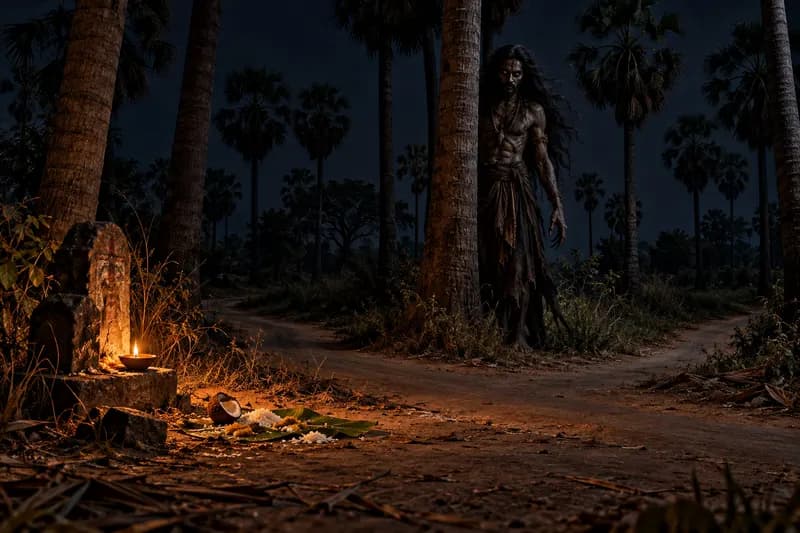
- Carry neem leaves when traveling through forest areas. — Neem is the Arakan's weakness — its bitter, purifying nature is antithetical to the Arakan's energy. Neem leaves in the pocket, neem oil on the body, neem branches over the doorway. These are not superstitions in the folk tradition — they are protocols.
- The possessed man must be taken to an Ayyanar temple or Amman temple. — The village guardian deities — Ayyanar, Karuppannasamy, Mariamman — hold jurisdiction over forest spirits. Their temples are the designated containment and extraction sites. Do not attempt exorcism at home — take the man to sacred ground where the Arakan is weaker.
- Do not reason with the possessed. The Arakan mimics rationality. — The Arakan can use its host's intelligence, memories, and vocabulary. It will argue. It will explain. It will say reasonable things in a reasonable voice. This is not the man speaking — it is the Arakan using the man's mind as a tool. Do not engage in conversation. Engage a healer.
What They Don't Tell You
The Arakan doesn't possess randomly. Village mantravadis in Tamil Nadu will tell you — quietly, privately — that the Arakan chooses men who are already carrying unprocessed rage. Not bad men. Men who have swallowed their anger for years, who have absorbed injustice without expressing it, who have been patient beyond their capacity. The Arakan finds the pressure point and releases it. In this reading, the Arakan is not an invading force — it is a detonator for something that was already explosive. This is why the possession feels so personal, why the violence targets the people closest to the man. The Arakan doesn't bring its own anger. It weaponizes his.
What Does the Arakan Want?
The Arakan wants a body. It exists as disembodied force — violence without form, rage without direction. It has no kingdom like the mythological Rakshasas, no court, no civilization. It is pure entropy, and entropy needs a structure to dismantle. The human body provides that structure.
Once inside a host, the Arakan wants chaos. It wants the ordered world of the man — his family, his relationships, his reputation, his self-control — to come apart. Every act of violence the possessed man commits is the Arakan feeding on the destruction of human bonds. The broken arm of a son. The terrified face of a wife. The shattered trust of a community. These are not collateral damage. They are the meal.
The Arakan also wants to stay. Possession is not a hit-and-run — the entity embeds itself deeper with each passing day, each violent act. The violence is both the symptom and the anchor: every time the possessed man hurts someone, the Arakan's grip tightens. This is why early intervention is critical. A seven-day possession can be exorcised. A seven-month possession may be permanent.
At its deepest level, the Arakan represents something the Tamil folk tradition takes very seriously: the idea that violence is a spiritual infection, not just a behavioral choice. A man who becomes violent has not simply 'snapped' — something has entered him. This framework removes blame from the individual while still demanding intervention. It is compassionate and urgent in equal measure.

You're Most at Risk If...
- You are a man who carries unresolved anger or suppressed rage
- You enter forested areas alone, especially after dark
- You are emotionally volatile — quick to anger, slow to calm
- You live at the edge of dense forest, particularly in Tamil Nadu's Western Ghats region
- You have consumed food or drink from offerings left at crossroads or cremation grounds
- You have recently experienced a traumatic event that has left you emotionally raw and ungrounded
Offerings & Appeasement
| Offering | Purpose |
|---|---|
| Offerings at the Forest Edge | Before entering forest areas, place an offering at the treeline — a coconut broken in half, a handful of rice, a few neem leaves. This is not worship of the Arakan — it is a declaration that you are aware of its presence and are not entering carelessly. The offering buys awareness, not safety. |
| Blood Offering (Proxy) | In some Tamil traditions, a proxy blood offering is made — typically a rooster sacrificed at the Ayyanar temple — to satisfy the Arakan's appetite for violence without directing it at humans. This is one of the more visceral practices in the tradition, performed when possession is active and the healer needs to give the entity something to consume. |
| Neem and Ash | Sacred ash (vibhuti) mixed with crushed neem leaves, applied to the forehead and body of the at-risk or possessed individual. This combination is considered the most direct ward against Arakan energy — neem purifies, ash protects, and together they create a barrier the entity cannot cross. |
| Fire Offering | A homa (fire ritual) performed at the village temple — specific mantras chanted while offering ghee and dried herbs into the fire. The fire represents the daivic (divine) force that opposes the asuric (demonic) nature of the Arakan. Fire is the only element the Arakan fears. |
The Healer
Mantravadi (Tamil Nadu) — The village-level exorcist who specializes in possession cases. The mantravadi uses a combination of mantras, neem, fire, and physical restraint to extract the Arakan from its host. This is not gentle work — it is confrontational, physical, and dangerous for both the healer and the possessed.
Ayyanar Temple Priest — The priest of the village guardian temple — specifically temples with warrior-deity figures that face the forest. These priests maintain the spiritual boundary between forest (wild, asuric) and village (ordered, daivic). They have specific protocols for Arakan possession.
Siddha Practitioner — Siddha medicine — Tamil Nadu's traditional medical system — includes treatments for what it classifies as 'graha dosha' (planetary/spirit affliction). Some Siddha practitioners combine herbal treatments with ritual work for possession cases, treating both the body and the entity simultaneously.
The Key Difference — The Arakan requires forceful extraction — unlike the gentle approaches used for Aatma or Thayee, the Arakan must be confronted, overpowered, and expelled. The healer is not mediating or negotiating. The healer is fighting. This is why Arakan exorcisms are the most physically intense in the Tamil folk tradition.
What If You Dream of an Arakan?
| Symbol | Meaning | |
|---|---|---|
| 🌲 | Walking into a Dark Forest | You are approaching a part of yourself that is wild, uncontrolled, and potentially dangerous. The forest in the dream is your own suppressed emotions — anger, resentment, pain you haven't processed. The dream is a warning: process it consciously, or something else will process it for you. |
| 👤 | A Familiar Person Acting Strangely | Someone close to you may be changing in ways you haven't consciously acknowledged. The dream exaggerates the change so you notice it. Pay attention to who the person is — your unconscious mind is flagging a real-world concern. |
| 💪 | Superhuman Strength | You are stronger than you realize — but the strength is not under your control. This can be creative energy, ambition, or drive that has no healthy outlet. Channel it before it channels you. |
| 🔥 | Fire in the Forest | Purification. Something destructive needs to burn away for something healthy to grow. The fire is painful but necessary. In the context of the Arakan, fire always represents the cure — the divine force that opposes demonic entropy. |
The Arakan in Art History
Chola Period — Temple Sculptures (9th–13th century): Chola temples across Tamil Nadu feature dramatic sculptures of Rakshasas — fierce, muscular figures with bulging eyes and fanged mouths, positioned as defeated enemies beneath the feet of gods. These are the visual ancestors of the Arakan, the mythological source rendered in stone.
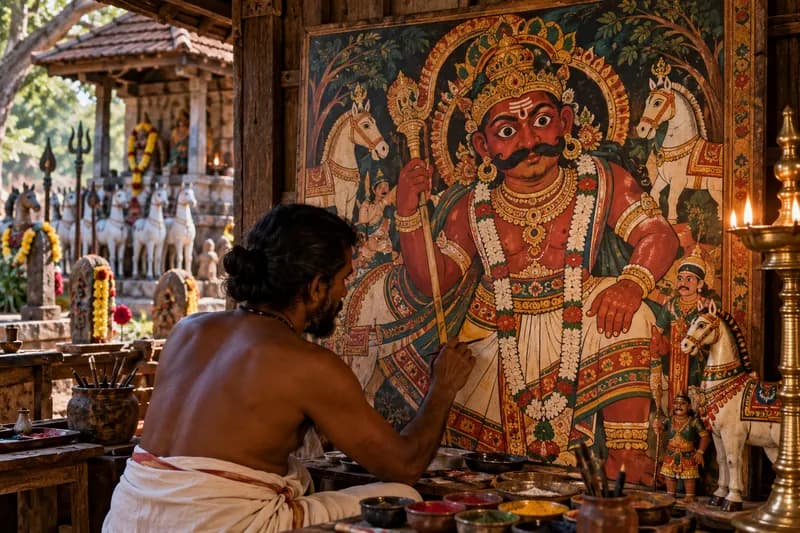
Ayyanar Temple Guardian Figures: The massive terracotta warrior figures at Ayyanar temples — some standing over 15 feet tall — represent the village guardians who protect against forest spirits including the Arakan. These figures face outward, toward the forest, in permanent vigilance. They are among the most dramatic folk-art installations in India.
Thanjavur Paintings: The rich, gold-leaf painting tradition of Thanjavur includes depictions of the Ramayana — including Ravana and his Rakshasa armies. These paintings kept the visual language of the Arakan's mythological ancestors alive in domestic and temple art.
Tamil Folk Performance — Therukoothu: The Tamil street theatre tradition of Therukoothu features Arakan/Rakshasa characters in elaborate costumes — fierce makeup, exaggerated gestures, deep-voiced dialogue. These performances are both entertainment and cautionary tale, keeping the Arakan concept viscerally alive in village culture.
Cross-Regional Patterns
Pishaach · Brahmarakshasa · Vetala · Bhut (Gond) · Mayana Kollai
| Dawn as hard limit | Yes — weakens at dawn |
| Iron weakness | No |
| Tree-dwelling | Forest-based, specific trees |
| Counting compulsion | No |
| Backward feet | No |
Global Equivalent: The closest global parallels are the Dybbuk of Jewish tradition (a disembodied spirit that possesses the living), the demonic possession concepts in Christian tradition, and the Wendigo of Algonquian lore (a spirit of violent hunger that takes over a person). What makes the Arakan distinct is its specificity: it targets men, it amplifies existing anger, and it uses the possessed man's own relationships as weapons. It is not random evil — it is strategic, personal, and designed to destroy from the inside out.
In Culture — Movies, Books, Games
| Type | Title | Description |
|---|---|---|
| Film | Chandramukhi (Tamil, 2005) | Rajinikanth's blockbuster features possession and exorcism rooted in South Indian folk tradition. While the possessed character is female, the film's depiction of possession symptoms, temple-based exorcism, and the mantravadi's role draws directly from the same tradition that produces Arakan narratives. |
| Film | Pisasu (Tamil, 2014) | A Tamil horror film that explores possession with unusual subtlety — the possession is gradual, behavioral, and initially mistaken for mental illness. This slow-burn approach mirrors the actual folk reports of Arakan possession. |
| Literature | Kamba Ramayanam (12th century) | Kamban's Tamil adaptation of the Ramayana features vivid depictions of Rakshasas — the literary and mythological ancestors of the folk Arakan. The text is still recited and performed across Tamil Nadu, keeping the Rakshasa/Arakan concept alive in literary culture. |
| Folk Performance | Therukoothu — Tamil Street Theatre | Village performances that dramatize mythological stories including Rakshasa encounters. The Arakan/Rakshasa character is always the most dramatic role — heavy makeup, deep voice, exaggerated violence. These performances serve as both entertainment and communal processing of the Arakan concept. |
| Television | Tamil Horror Serials (Various) | Tamil television regularly features male possession storylines — men who become violent, families in crisis, mantravadis performing exorcisms. These serials are directly descended from the Arakan folk tradition and are watched by millions in Tamil Nadu. |
ACCURACY RATING: HIGH IN FOLK TRADITION · DRAMATIZED IN MEDIA
Is the Arakan Still Real?
- Active belief persists in rural Tamil Nadu, particularly in villages near dense forest. Families report cases of sudden-onset male violence to local mantravadis before (or instead of) seeking medical help. The Arakan diagnosis is applied to cases that match the specific pattern: a previously non-violent man who becomes violently aggressive with no apparent medical or psychological trigger.
- Ayyanar temples across Tamil Nadu still perform protection rituals specifically against forest spirits, including the Arakan. These are not historical reenactments — they are active, ongoing religious practices maintained by village communities.
- The concept has partially merged with modern understandings of mental health. Some progressive healers in Tamil Nadu use the Arakan framework alongside medical treatment — acknowledging the folk diagnosis while also recommending psychiatric care. This hybrid approach is controversial but increasingly common.
- Forest-edge taboos remain strictly observed in many Tamil villages — not entering the forest after dark, not going alone, not going angry. These rules are taught to children as seriously as 'look both ways before crossing the road.'
- The Arakan tradition provides a culturally specific framework for understanding domestic violence — one that externalizes the cause (the spirit) while still demanding intervention (the exorcism). This is both its strength (it removes shame, enabling families to seek help) and its limitation (it can obscure genuine behavioral and psychiatric issues that need medical treatment).
Expert & Academic Context
- Rakshasa mythology in Tamil literature — Academic studies of how the pan-Indian Rakshasa concept was adapted and localized in Tamil folk tradition, transforming mythological demons into village-level possession spirits.
- Tamil folk medicine and spirit possession — Ethnographic research on the intersection of Siddha medicine, mantravadi practice, and folk psychiatry in Tamil Nadu — including documented cases classified as Arakan possession.
- Ghosts, Monsters and Demons of India — Rakesh Khanna — Comprehensive documentation of possession-type spirits across Indian regions, including Tamil Nadu's specific Arakan tradition and its relationship to broader Rakshasa mythology.
- Village guardian deity traditions — Ayyanar studies — Academic research on the Ayyanar temple system and its role in village protection against forest spirits, including the specific protocols for Arakan-type possession.
- Domestic violence and spirit possession — anthropological studies — Critical analysis of how spirit possession frameworks in South India function in relation to domestic violence — both as a mechanism for seeking help and as a potential barrier to medical intervention.
The Arakan embodies Tamil Nadu's deepest anxiety about masculinity: that the violence men are capable of is not a character trait but a force — something that can enter from outside, something that can be caught like a disease. This framework is simultaneously compassionate and dangerous. Compassionate because it refuses to reduce a violent man to his violence — it insists that something happened to him, that the real him is still inside, that he can be saved. Dangerous because it can excuse violence, delay medical intervention, and locate the problem outside the man rather than within the culture that shaped him. The Arakan is Tamil folk psychology's most honest confession: that it does not fully understand why good men become violent, and it has created a supernatural framework to contain that not-knowing.
If You Encounter an Arakan-Possessed Man
Frequently Asked Questions
▶What is an Arakan?
An Arakan is a demonic possession spirit from Tamil Nadu folklore that enters the body of a man and makes him violently aggressive. The word derives from 'arakkan' (Rakshasa/demon in Tamil). It is a disembodied force that needs a human host to act, and it specifically targets men, amplifying their suppressed anger into uncontrollable violence.
▶How does Arakan possession happen?
According to folk tradition, possession occurs when a man enters dense forest alone after dark, when he's in a state of extreme anger or emotional vulnerability, or when he consumes offerings left at crossroads or cremation grounds. The Arakan is attracted to unprocessed rage — it finds men who are already carrying anger and amplifies it.
▶Can women be possessed by an Arakan?
Traditional folk belief says no — the Arakan is a masculine entity that specifically possesses men. Women in Tamil folk tradition are susceptible to different types of possession (such as by Mohini or Pey spirits). The gender-specificity of the Arakan is one of its defining characteristics.
▶How is an Arakan exorcised?
Through a combination of physical restraint, mantras, fire rituals, neem application, and sacred ash — typically performed at an Ayyanar or Amman temple by a trained mantravadi. The exorcism is confrontational and physically intense. Early intervention is critical — the longer the possession continues, the harder the extraction.
▶Is Arakan possession the same as mental illness?
This is a complex question. The folk tradition treats them as distinct — Arakan possession is a spiritual condition. Modern practitioners increasingly recognize overlap with psychiatric conditions. The most responsible approach in contemporary Tamil Nadu combines folk healing with medical consultation, though this remains controversial.
▶How do you prevent Arakan possession?
Don't enter forest alone after dark. Don't go near forests when angry. Carry neem leaves in forest areas. Don't eat food found at crossroads. Maintain spiritual practices that keep you grounded. The folk tradition is clear: prevention is about avoiding the conditions the Arakan exploits — isolation, darkness, and unprocessed anger.
Explore More
Related Spirits
Pishaach · Brahmarakshasa · Vetala · Bhut (Gond) · Mayana Kollai
Explore Further
Stories Are Being Summoned
One ghost story per week. Every Tuesday at midnight.