Acheri
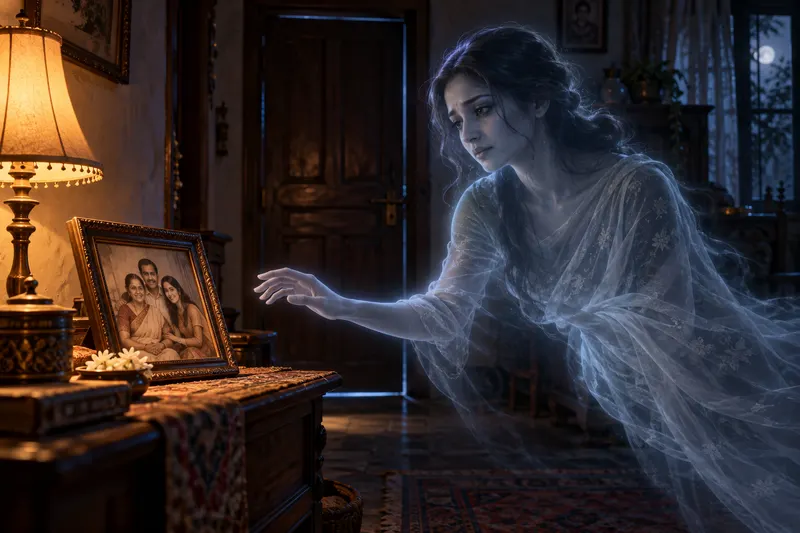
She doesn't touch you. She doesn't speak. Her shadow falls on you — and by morning, you are burning with a fever no medicine can break.
- What Is an Acheri?
- Why the Acheri Is Terrifying
- Origin — How It Came to Exist
- Appearance & Manifestation
- The Singing on Rohtang
- The Rules — How to Survive
- What They Don't Tell You
- What Does the Acheri Want?
- You're Most at Risk If...
- Offerings & Appeasement
- The Healer
- What If You Dream of an Acheri?
- The Acheri in Art History
- Cross-Regional Patterns
- In Culture — Movies, Books, Games
- Is the Acheri Still Real?
- Expert & Academic Context
- If You Encounter an Acheri
- Frequently Asked Questions
- Explore More
| Acheri | |
|---|---|
| Also Known As | Achuri, Acheli, Achery, Ahcheri |
| Script | अछेरी (Devanagari) |
| Pronunciation | ah-CHEH-ree (अ-छे-री) |
| Region | Himalayan regions — Himachal Pradesh, Uttarakhand, Kashmir; traces in Kumaon and Garhwal hill districts |
| Category | Child Ghost / Mountain Spirit |
| Danger Level | Deadly |
| Fear Method | Shadow-casting disease, mimicry of innocent play, targeting children |
| Warning Sign | The sound of a little girl singing on a mountainside after dark; unexplained fever in children with no medical cause |
| First Documented | Oral traditions of Himalayan hill communities (pre-colonial); referenced in colonial-era ethnographies of Kumaon and Garhwal (19th century) |
| Still Believed? | Yes — red thread protection rituals for children are still practiced in remote Himalayan villages; mothers in Himachal and Uttarakhand tie red threads on children's wrists to this day |
| Related | Churel · Bhut (Gond) · Pishaach · Mohini · Nishi |
What Is an Acheri?
The Acheri (अछेरी) is the ghost of a little girl who died in the mountains — some say from neglect, some say from disease, some say she was murdered and left on a high ridge where no one found the body. She is not a demon. She is not a deity. She is a dead child who comes down from the mountain peaks at night, singing as she descends, and spreads fatal illness by casting her shadow on the living — especially on other children. She is found across the Himalayan belt, from the cedar forests of Himachal Pradesh to the high valleys of Uttarakhand and the remote villages of Kashmir.
What makes the Acheri uniquely disturbing among Indian supernatural entities is the weaponization of innocence. She looks like a child. She sings like a child. She plays like a child. And her method of killing — her shadow — is something you cannot fight, cannot block, cannot even see coming in the dark. The only documented protection is a red thread tied around the wrist or neck. Not iron. Not mantras. Not fire. A thread. Red. That is all that stands between a sleeping child and a fever that will not break.
Why the Acheri Is Terrifying
INSTINCT EXPLOITED: THE TRUST WE PLACE IN CHILDREN
You are in a village in the Kullu Valley. It is late — past ten, past eleven. The kerosene lamp in your room has been turned low. Outside, the deodar trees are black columns against a sky full of stars. The silence is the kind you only get at altitude: total, pressurized, ringing.
Then you hear singing.
It is a child's voice. High, clear, sweet — the kind of folk song a grandmother would teach. It is coming from uphill, from the ridge above the village where the goat paths end and the rock begins. A little girl, singing in the dark, on a mountainside, at midnight.
Your first instinct is concern. A child is lost. A child needs help. You want to go to the window. You want to call out. Every human impulse you have says: help the child.
Do not.
Because there is no child. There is only the Acheri — descending from the peaks where she died, singing as she comes down, and her shadow is reaching ahead of her like a dark hand. If it falls on you — if it touches you while you sleep, while you stand at the window straining to see her — you will wake with a fever. Your children will wake with a fever. And in the villages of the high Himalayas, where the nearest hospital is a day's walk through mountain passes, that fever does not break.
The horror of the Acheri is that she triggers every protective instinct you have — and those instincts are exactly what kills you.
Origin — How It Came to Exist
The Dead Girl on the Mountain
The Acheri is the spirit of a girl child who died on a mountain — abandoned, lost, or left to die. In some tellings, she was a girl from a poor family who was sent to graze goats on a high ridge and never came home. In others, she was a child who died of smallpox or cholera during an epidemic and was buried hastily on the slopes rather than given proper rites. In the harshest versions, she was killed — an unwanted daughter disposed of where the village would not see. What unites all versions is this: a child died alone, in the cold, on a mountain. And she did not leave.
The Shadow as Weapon
The Acheri does not bite, claw, possess, or strangle. She casts her shadow. In Himalayan folk belief, a shadow is not simply the absence of light — it is the projection of a being's essence. The Acheri's shadow carries her death: the cold of the mountain, the fever of the disease that killed her, the abandonment she suffered. When her shadow falls on a living person — particularly a child — it transfers that death onto them. The illness that follows is not infection. It is contamination by a dead child's loneliness.
Why She Targets Children
The Acheri targets children because she was one. In Himalayan folk psychology, the Acheri does not understand that she is dead. She comes down from the mountain to play — to find the playmates she never had, to join the village life she was denied. She does not intend to kill. She simply does not know that her touch is death. This makes her more tragic than malevolent — a ghost who murders through the same innocence that defines childhood itself.
The Red Thread
The universal protection against the Acheri is a red thread — tied around the wrist, the neck, or the ankle of a child. Red is the color of life, of blood, of the living body. It marks the wearer as alive in a way the Acheri can recognize. Some traditions say the red thread makes the child invisible to the Acheri. Others say it burns her shadow on contact. The most poignant interpretation: the red thread tells the Acheri, this child is loved, this child is claimed, this child has a home — everything the Acheri herself did not have. And the Acheri, recognizing what she was denied, turns away.
Appearance & Manifestation
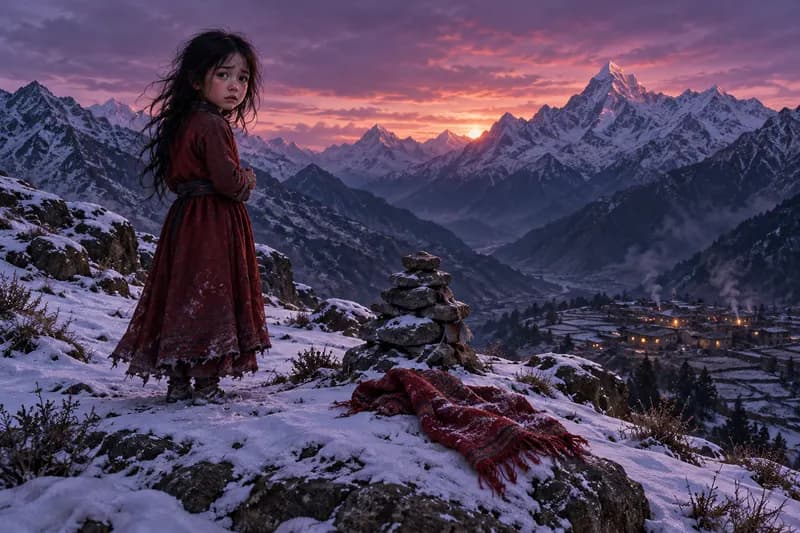
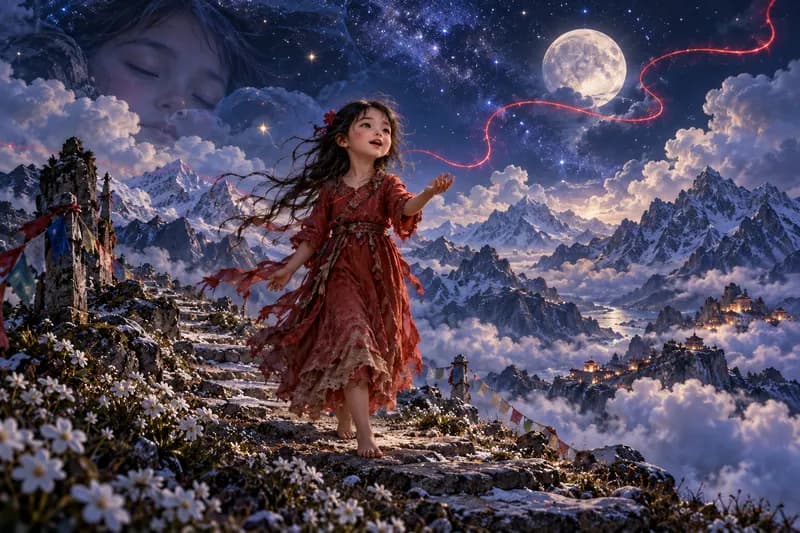
| 👁 Sight | Appears as a small girl — thin, dark-haired, wearing tattered clothing or sometimes a faded red dress. Her face is gaunt but recognizably childlike. In some accounts, she is translucent, visible only at the edge of lamplight. In others, she looks entirely real — indistinguishable from a living child until you notice she casts no shadow of her own. The shadow she projects onto others is not hers. It is something else entirely. |
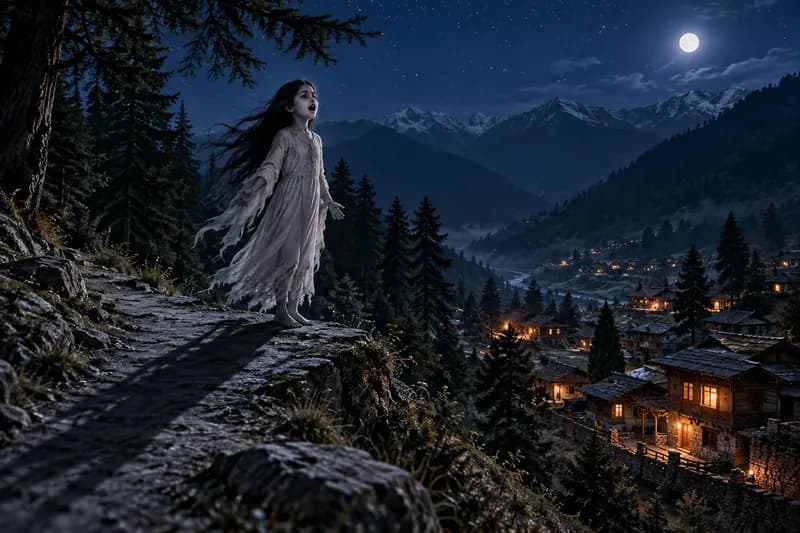
| 🔊 Sound | Singing. Always singing. A high, clear voice carrying folk melodies down the mountainside — Pahari hill songs, lullabies, the kind of tunes children sing while playing. The singing gets louder as she descends. By the time you can make out the words, she is already close enough for her shadow to reach you. |
| 🍃 Smell | Cold air and pine resin — the smell of high altitude, of places above the treeline where the wind never stops. Some accounts mention a faint smell of marigolds, which in Indian tradition are associated with death and funeral rites. |
| ❄ Temperature | A sudden, sharp drop in temperature — not gradual cooling but an immediate plunge, as if a door to the high peaks has been opened. The cold she brings is mountain cold: thin, dry, cutting. It settles in the bones of children first. |
| 🌑 Time | Descends from the mountains at nightfall. Most active between midnight and the hours before dawn. Some traditions say she is strongest during the transitional seasons — late autumn and early spring — when the mountain weather is most unpredictable and children most vulnerable to illness. |
| 🏚 Habitat | Mountain ridges, high passes, alpine meadows above the villages. She descends to the village but does not dwell there. Her home is the cold place where she died — the exposed rock, the windswept ridge, the place above the treeline where nothing grows. She visits the living but always returns to the heights by dawn. |
The Singing on Rohtang
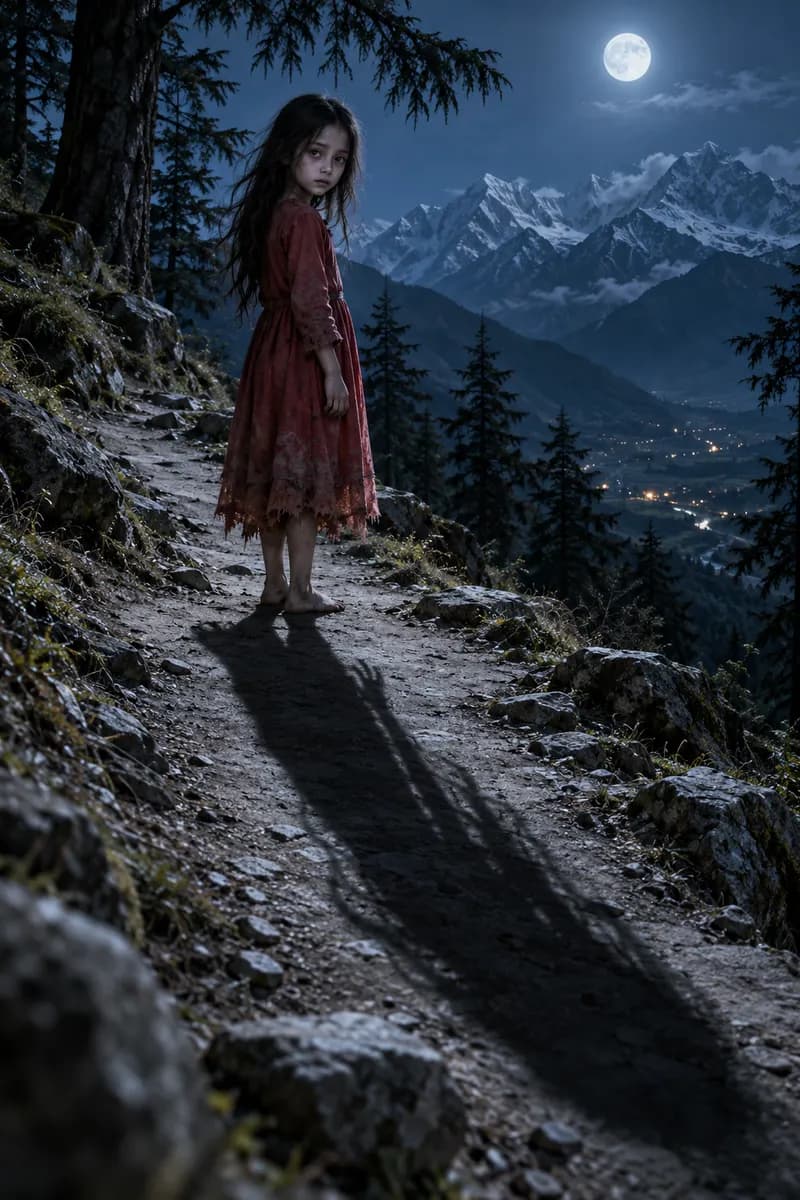
In a village below the Rohtang Pass, in the upper Kullu Valley of Himachal Pradesh, there lived a woman named Kamla who had three daughters. The youngest was five years old, and her name was Pooja. It was October — the apple harvest was done, the tourists had left, and the first snows were visible on the high peaks. The nights were already cold enough to sleep under two blankets.
Kamla's mother-in-law, who was from the old village higher up the valley — a settlement that had been abandoned twenty years earlier when the road washed out — told Kamla to tie red threads on all three girls before the first snowfall. She said it every year. She said it the way she said everything: as fact, not as request. Kamla tied threads on the two older girls. But Pooja had pulled hers off two days ago, playing in the orchard, and Kamla had not replaced it.
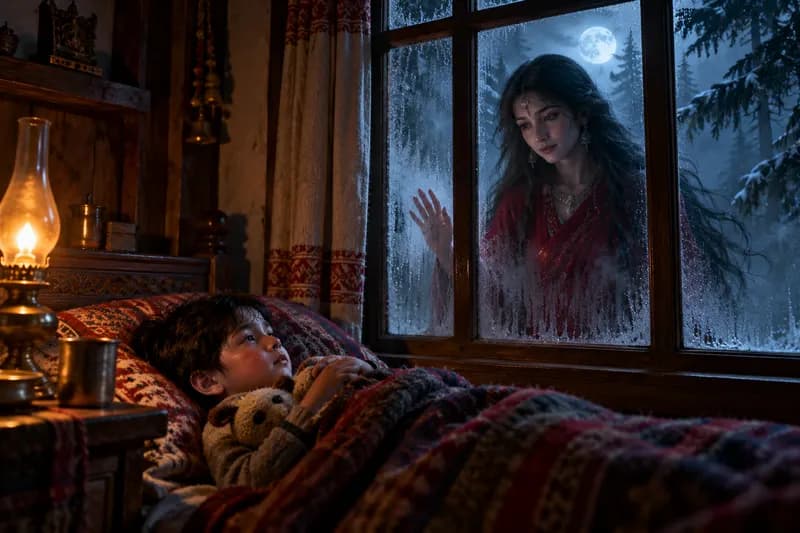
That night, Pooja woke up crying. Not screaming — crying quietly, the way children do when they are confused rather than afraid. Kamla went to her and found the girl sitting up in bed, looking at the window. "There is a girl outside," Pooja said. "She is singing. Can she come in and play?"
Kamla looked at the window. The glass was fogged with cold. She could see nothing outside but the dark shapes of apple trees. She heard nothing. She told Pooja to sleep and went back to bed.
By morning, Pooja had a fever. Not high — just enough to keep her in bed. Kamla gave her paracetamol and warm water and assumed it was a cold. By evening the fever was higher. By the second morning it was violent — the girl was burning, shivering, talking to someone who was not there. She kept saying the same thing: "The girl wants to play. Why won't you let her in?"
Kamla's mother-in-law arrived that afternoon. She took one look at Pooja, one look at the bare wrist where the red thread should have been, and said nothing. She went to the village temple, got red thread blessed by the priest, and tied it around Pooja's wrist, her neck, and both ankles. She burned juniper branches in the room. She did not explain what she was doing. She did not need to.
The fever broke that night. Pooja slept through until morning. When she woke, she did not remember the singing girl. She did not ask about playing. The red thread stayed on her wrist until it frayed and fell off six months later, by which time the snows had long melted and the Acheri had returned to the high ridges where the air is too thin for anything living to stay.
Kamla never forgot to tie the thread again.
The Rules — How to Survive
☠ WARNING ☠
Six rules for surviving an Acheri encounter
- Tie a red thread on every child before nightfall. — The red thread is the only universally documented protection against the Acheri. Red is the color of life, of blood — it marks the child as living and claimed. Without it, the child is visible to the Acheri as a potential playmate.
- Do not go toward the singing. — The Acheri's singing triggers the protective instinct — you hear a child's voice on the mountain and you want to help. This instinct will kill you. The singing is not a cry for help. It is the sound of the Acheri descending.
- Keep children indoors after dark in mountain villages. — The Acheri comes down from the peaks at night. She is drawn to children who are outside, exposed, unsheltered. A child playing in the dark near the treeline is indistinguishable from an invitation.
- Do not let the Acheri's shadow fall on you. — The shadow is the weapon. If you see a child-shaped figure approaching and the moonlight casts a shadow ahead of it — move. Get out of the shadow's path. The fever begins at the moment of contact.
- Burn juniper or deodar branches if you suspect her presence. — In Himalayan folk tradition, the smoke of juniper and deodar cedar is a purifier that mountain spirits cannot tolerate. The smoke fills the space between you and the shadow, creating a barrier the Acheri's projection cannot cross.
- If a child speaks of a girl who wants to play — act immediately. — Children can see the Acheri before adults can. If a child reports a playmate who comes at night, who sings, who stands outside the window — this is not imagination. Tie the red thread. Burn the juniper. Do not wait for the fever.
What They Don't Tell You
The Acheri is not hunting. She is not vengeful. She is not evil in any recognizable sense. She is a dead child who comes down from the mountain because she is lonely. She sings because singing is what children do. She reaches out with her shadow because shadow is all she has left. The illness she spreads is not a curse — it is the residue of her own death, the cold and the fever and the abandonment leaking out of her like heat from a wound. The red thread does not repel her. It reminds her. It shows her that this child — the one sleeping in the warm bed, in the house with the lit lamp — has what she never had. A family. A claim. A thread that says *someone wants you here.* And the Acheri, recognizing what she cannot have, goes back up the mountain. Every night. Alone.
What Does the Acheri Want?
The Acheri wants to play. That is all.
She was a child when she died — alone on a mountain, cold, sick, abandoned. She never had a childhood. She never had friends, or warmth, or the simple experience of another child saying come play with me. So she descends. Every night, when the living children are sleeping, she comes down from the ridge and looks for someone to play with.
She does not understand death. She does not understand that her shadow carries disease. She does not understand that every child she reaches for will wake with a fever that may kill them. She is a five-year-old ghost with a five-year-old's comprehension of consequence — which is to say, none.
This is what makes the Acheri the most heartbreaking entity in the Indian supernatural tradition. She is not a monster. She is a child who was failed by the living world and now fails it in return — not out of malice, but out of the same desperate, wordless need that every abandoned child carries: see me. Want me. Let me belong.
You're Most at Risk If...
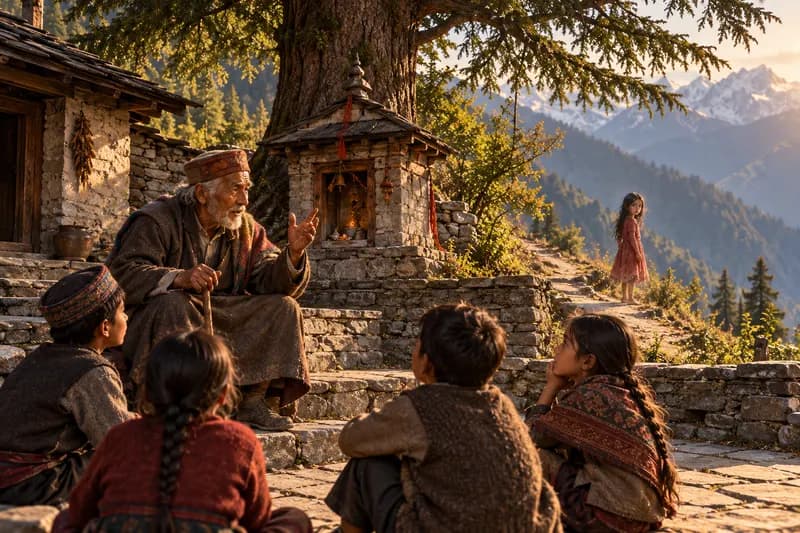
- You are a child under the age of ten — the Acheri targets her own age group
- You are in a Himalayan village above 2,000 meters, especially during autumn or early spring
- You are sleeping without a red thread tied on your wrist
- You hear singing on the mountainside after dark and feel compelled to investigate
- Your house is at the edge of the village, closest to the mountain path
- You are a child who has recently been ill — weakness attracts the Acheri's shadow
Offerings & Appeasement
| Offering | Purpose |
|---|---|
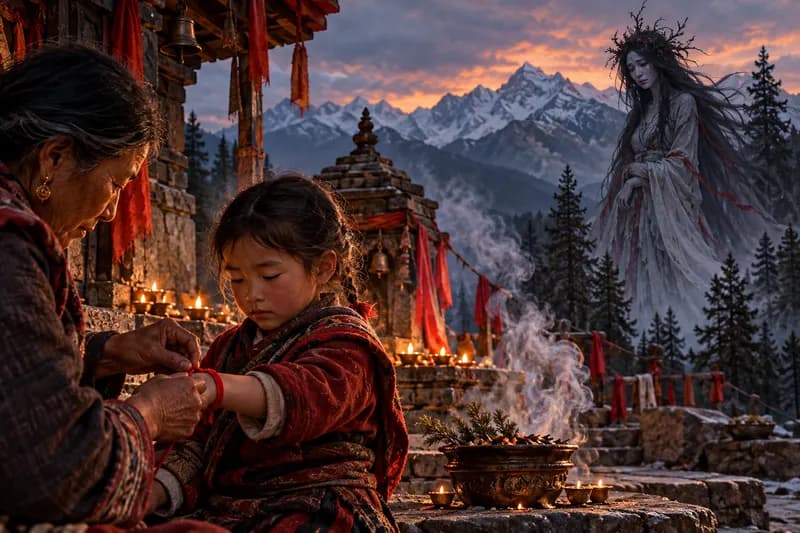
| Red Thread Blessing | Red thread blessed at the village temple and tied on children's wrists before the first snowfall. This is the primary and most widespread protection — not technically an offering to the Acheri but a ward that makes children invisible to her. Renewed every season. |
| Juniper Smoke Offering | Burning juniper branches (dhoop) at the threshold of the house, particularly at dusk. The smoke is both offering and barrier — it honors the mountain spirits while creating a boundary the Acheri cannot cross. Practiced across Himachal, Uttarakhand, and Ladakh. |
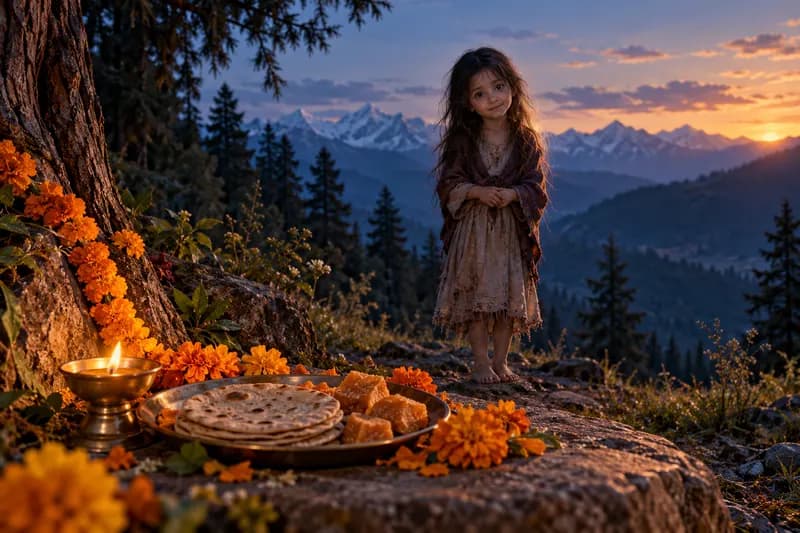
| Food Left at the Treeline | In some Kumaoni villages, families leave small offerings of food — rotis, jaggery, milk — at the edge of the village where the forest begins. The logic is compassion: the Acheri was a hungry, neglected child. Feed her, and she may not come looking for what the living children have. |
| Marigold Garlands on the Path | Marigold garlands placed on the mountain paths above the village, particularly during festivals and after a child in the village has fallen inexplicably ill. Marigolds are the flowers of the dead — they tell the Acheri she is remembered, she is acknowledged, even if she cannot come home. |
The Healer
Village Vaidya (Himalayan Healer) — The traditional mountain healer who combines herbal medicine with folk ritual. For Acheri-related illness, the vaidya administers herbal fever remedies while simultaneously performing the red thread ritual and juniper fumigation. The treatment addresses both the physical symptom and its supernatural cause.
Pahari Jhankri (Hill Shaman) — Found across the Himalayan belt from Nepal to Kashmir. The jhankri enters a trance state to communicate with mountain spirits. In cases of Acheri illness, the jhankri identifies which peak the Acheri descended from and performs rituals to send her back — not with force, but with acknowledgment and farewell.
Temple Priest (Devi Temple) — In regions where the Acheri is understood as a corrupted form of a mountain goddess, the local Devi temple priest performs pujas to the mother goddess, asking her to reclaim the lost child-spirit. The logic is maternal: the goddess collects the Acheri as a mother collects a wandering child.
What If You Dream of an Acheri?
| Symbol | Meaning | |
|---|---|---|
| 🎒 | A Child Singing on a Mountain | Something you lost in childhood — innocence, safety, trust — is calling to you. The dream is not warning you of danger. It is showing you a grief you have not processed, a loss so old you forgot it was there. The singing is the sound of what you left behind. |
| 🧵 | Tying a Red Thread | You are protecting something vulnerable — a relationship, a project, a part of yourself that feels exposed. The act of tying the thread is an act of claiming: you are saying *this matters to me, this is mine, I will not let it be taken.* The dream is telling you to do this in waking life. |
| 🌫 | A Shadow Falling on a Child | Fear for a child in your life — your own or someone else's. Not necessarily supernatural fear. The shadow represents any threat to innocence: illness, neglect, the world's indifference. The dream is asking you to pay attention to a child who needs protection. |
| 🏔 | Climbing Toward the Singing | You are pursuing something that feels like compassion but may be self-destruction. The urge to climb toward the Acheri is the urge to fix something unfixable — to save someone who cannot be saved, to answer a need that has no answer. The dream is warning you: some sadnesses are not yours to carry. |
The Acheri in Art History
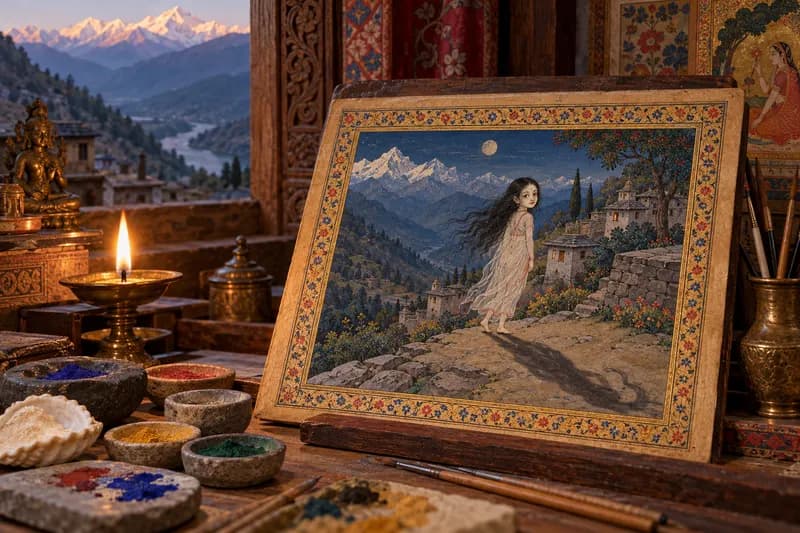
Himalayan Folk Art — Pahari Miniatures (17th–19th Century): The Pahari painting tradition of the Himalayan foothills occasionally depicted mountain spirits in scenes of village life. While the Acheri is rarely named directly, child-spirits appear in miniatures from Kangra and Basohli — small figures at the edges of forest scenes, translucent, watching village children play.
Kumaoni Aipan Floor Art: The Aipan tradition of Kumaon (Uttarakhand) includes protective geometric patterns painted on floors and doorways during festivals. Specific Aipan designs are painted at the threshold of homes with young children — patterns believed to prevent mountain spirits, including the Acheri, from crossing into the living space.
Himalayan Temple Carvings — Kullu and Mandi: Wooden temples in the Kullu and Mandi districts of Himachal Pradesh feature carved panels depicting local deities and spirits. Some carvings show small, child-like figures descending mountain paths — interpreted by local tradition as representations of the Acheri or similar mountain child-spirits.
Cross-Regional Patterns
Churel · Bhut (Gond) · Pishaach · Mohini · Nishi
| Dawn as hard limit | Yes |
| Iron weakness | No |
| Tree-dwelling | No — mountain peaks |
| Counting compulsion | No |
| Backward feet | No |
Global Equivalent: The closest global parallel is the Myling of Scandinavian folklore — the ghost of an unbaptized or abandoned child that haunts the living, seeking acknowledgment and proper burial. Both the Acheri and the Myling are fundamentally stories about what happens when a society fails its children. The Banshee of Irish tradition shares the auditory warning element — a supernatural female voice that precedes death — but the Banshee warns of death rather than causing it. The Acheri causes death through a mechanism (shadow) that has no direct parallel in Western folklore.
In Culture — Movies, Books, Games
| Type | Title | Description |
|---|---|---|
| Film | Tumbbad (2018) | While not directly about the Acheri, this Indian horror film draws on the same folk-horror tradition — ancestral curses, rural superstition, the idea that the land itself remembers what was done to the vulnerable. The visual language of mountain horror in Indian cinema owes much to Acheri-adjacent folklore. |
| Television | Aahat and Fear Files (Indian Horror Anthology Series) | Multiple episodes across Indian horror anthology shows have adapted the Acheri legend — a child ghost on a hillside, the red thread, the unexplained fever. These are among the most popular episodes in the genre, suggesting the story resonates deeply with Indian audiences. |
| Tabletop/RPG | Acheri in Horror RPG Settings | The Acheri appears in multiple tabletop RPG bestiaries and monster manuals as a unique Indian undead type. Her shadow-as-weapon mechanic and red-thread vulnerability make her a distinctive gameplay entity unlike anything in Western monster traditions. |
| Literature | Himalayan Ghost Stories — Regional Collections | Multiple collections of Himalayan folk tales include Acheri stories as central narratives. These are not horror fiction — they are ethnographic recordings of stories told by village elders to explain childhood illness and enforce nighttime safety rules for children. |
| Music | Pahari Folk Songs | Several traditional Pahari folk songs reference the Acheri indirectly — lullabies warning children to stay inside after dark, songs about the mountain spirits that descend when the snow comes. These songs are still sung in remote villages, serving the dual purpose of entertainment and warning. |
ACCURACY RATING: HIGH IN FOLKLORE · RARE IN MAINSTREAM MEDIA
Is the Acheri Still Real?
- Red thread rituals for children are still practiced across Himalayan communities — in Himachal Pradesh, Uttarakhand, and parts of Kashmir. Mothers tie red threads on children's wrists before autumn, and the practice is so normalized that many families do it without consciously connecting it to the Acheri legend.
- Village elders in the Kullu Valley, Kinnaur, and Kumaon still warn children not to go outside after dark with specific reference to mountain spirits. The Acheri is named directly in some communities; in others, the warning is generic but the behavioral prescription is identical.
- When children in remote Himalayan villages develop unexplained fevers — particularly during seasonal transitions — the red thread ritual is often performed alongside modern medical treatment. The two are not seen as contradictory. The thread addresses what medicine cannot.
- Juniper and deodar fumigation of homes remains a standard practice in many Himalayan households, particularly when a child is ill. The practice predates any specific Acheri belief and is part of a broader Himalayan tradition of smoke-purification, but the Acheri is one of the entities it is believed to repel.
- The Acheri story functions as a practical child-safety mechanism. In mountain villages where the terrain is genuinely dangerous after dark — steep paths, wild animals, extreme cold — the Acheri legend keeps children indoors. Belief in the entity serves a real protective function, which is one reason it persists.
Expert & Academic Context
- E.T. Atkinson — The Himalayan Gazetteer (1882) — Colonial-era documentation of folk beliefs in the Kumaon and Garhwal divisions of the North-Western Provinces. Contains early English-language references to child-spirit beliefs in Himalayan communities, including entities matching the Acheri description.
- W. Crooke — Religion and Folklore of Northern India (1926) — Comprehensive ethnographic study of North Indian folk beliefs, including extensive documentation of mountain spirits, child ghosts, and protective rituals involving red thread. One of the earliest systematic attempts to catalog Himalayan supernatural entities.
- Ghosts, Monsters and Demons of India — Rakesh Khanna — Modern comprehensive reference documenting the Acheri alongside hundreds of other Indian supernatural entities. Includes regional variants, protection methods, and analysis of the shadow-as-weapon motif unique to this entity.
- Kumaoni and Garhwali Folk Traditions — Regional Studies — Multiple academic studies from Kumaon and Garhwal universities documenting oral traditions of the central Himalayan region. These studies record Acheri narratives as told by village elders, preserving variants that differ significantly from the standardized versions found in popular collections.
- Medical Anthropology of the Himalayas — Studies examining the intersection of folk belief and health practice in Himalayan communities. The Acheri belief system is analyzed as a folk epidemiological framework — a pre-modern explanation for childhood illness that also functions as a behavioral health intervention (keeping children indoors, maintaining hygiene rituals, seeking treatment for fevers).
- Comparative Studies in South Asian Folklore — Academic work situating the Acheri within the broader South Asian tradition of child-ghosts and mountain spirits. Comparative analysis with the Myling (Scandinavia), La Llorona (Mexico), and other global child-death folklore reveals shared structural elements across cultures.
The Acheri embodies the Himalayan region's deepest anxiety about its own children — the knowledge that mountain life is hard, that children die, and that some of those deaths are preventable. The entity is a mirror held up to the community: the Acheri exists because a child was neglected, abandoned, or left to die. Every Acheri was once a living girl. The red thread protection ritual is, at its core, an act of communal responsibility — by marking a child as protected, the community is saying *we see this child, we claim this child, we will not let this child become the next Acheri.* The gendered dimension is significant: the Acheri is always female, reflecting the specific vulnerability of girl children in patriarchal mountain societies where son-preference has historically led to the neglect of daughters. The Acheri is not just a ghost story. It is an indictment.
If You Encounter an Acheri
Frequently Asked Questions
▶What is an Acheri?
An Acheri is the ghost of a little girl who died on a mountain — from neglect, illness, or abandonment. She descends from the peaks at night, singing, and spreads fatal illness by casting her shadow on the living, especially children. She is found primarily in the Himalayan regions of India — Himachal Pradesh, Uttarakhand, and Kashmir.
▶How do you protect yourself from an Acheri?
The universally documented protection is a red thread tied around the wrist, neck, or ankle — particularly of children. Red is the color of life and marks the wearer as living and claimed. Additionally, burning juniper or deodar branches creates a smoke barrier the Acheri cannot cross. Keeping children indoors after dark in mountain villages is the most basic prevention.
▶Why does the Acheri target children?
The Acheri was a child when she died. In folk tradition, she does not understand that she is dead. She comes down from the mountain to find playmates — to experience the childhood she was denied. She does not intend to harm. Her shadow carries disease because it carries the residue of her own death: cold, fever, abandonment.
▶Is the Acheri still believed in today?
Yes. Red thread protection rituals are still practiced in Himalayan villages. Mothers tie threads on children before autumn. Village elders still warn children about mountain spirits after dark. When children develop unexplained fevers, the red thread ritual is performed alongside modern medicine. The belief persists because it also functions as a practical child-safety mechanism in dangerous mountain terrain.
▶What does hearing singing on a mountain at night mean?
In Himalayan folk tradition, hearing a child's voice singing on a mountainside after dark is a warning sign of an Acheri descending. The advice is absolute: do not go toward the singing, do not investigate, do not open windows or doors. Bring children inside, tie red threads, and burn juniper. The singing means the Acheri is already close.
▶What is the difference between an Acheri and a Churel?
Both are female ghosts, but they differ in almost every other way. The Churel is an adult woman who died during pregnancy or childbirth and targets adult men. The Acheri is a child who targets other children. The Churel is vengeful; the Acheri is lonely. The Churel has backward feet and lures victims with beauty; the Acheri sings and kills with her shadow. They come from entirely different regional traditions.
Explore More
Related Spirits
Churel · Bhut (Gond) · Pishaach · Mohini · Nishi
Explore Further
Spirits of The HimalayasAll Child Spirits & Disease Entities
Comparisons
Stories Are Being Summoned
One ghost story per week. Every Tuesday at midnight.