Bhoot
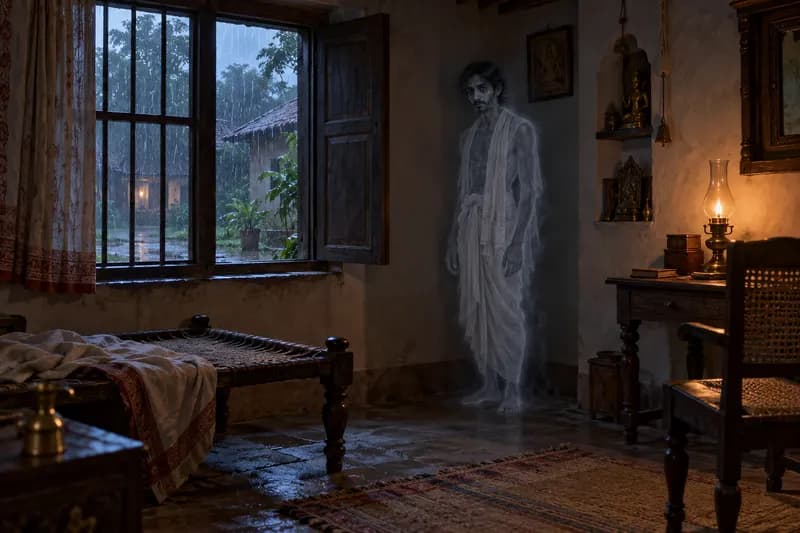
It was once someone you knew. It died badly. And now it stands in the corner of a room that smells faintly of rain — waiting for you to turn around.
- What Is a Bhoot?
- Why the Bhoot Is Terrifying
- Origin — How It Came to Exist
- Appearance & Manifestation
- The Third Call on the Siliguri Road
- The Rules — How to Survive
- What They Don't Tell You
- What Does the Bhoot Want?
- You're Most at Risk If...
- Offerings & Appeasement
- The Healer
- What If You Dream of a Bhoot?
- The Bhoot in Art History
- Cross-Regional Patterns
- In Culture — Movies, Books, Games
- Is the Bhoot Still Real?
- Expert & Academic Context
- If You Encounter a Bhoot
- Frequently Asked Questions
- Explore More
| Bhoot | |
|---|---|
| Also Known As | Bhut, Bhuta, Preta-Bhoot, Boot (Bengali) |
| Script | भूत (Devanagari) |
| Pronunciation | BHOOT (भूत) |
| Region | Pan-India — every state, every language, every village. No region of the subcontinent is without its Bhoot stories. |
| Category | Common Ghost / Restless Spirit |
| Danger Level | Dangerous |
| Fear Method | Haunting, possession, territorial aggression, emotional manipulation through familiarity |
| Warning Sign | The smell of wet earth where there is no rain; a shadow that does not match any object; sudden cold in a closed room; a familiar voice calling your name from an empty place |
| First Documented | Atharva Veda (c. 1000 BCE) — references to bhūta as restless dead; Garuda Purana (medieval period) — detailed taxonomy of ghostly states after death |
| Still Believed? | Yes — universally. Bhoot belief is the single most widespread supernatural belief in India, cutting across class, caste, education, religion, and region. |
| Related | Churel · Pret · Nishi · Pishaach · Shakchunni |
What Is a Bhoot?
The Bhoot (भूत) is the restless spirit of a person who died an unnatural, untimely, or violent death — before their destined time, before their duties were fulfilled, before their body received proper last rites. It is, in the simplest and most devastating sense, the most common ghost in India. Not the most powerful. Not the most exotic. The most common. The one your grandmother warned you about. The one your uncle swears he saw on the road to his village. The one that lives in every abandoned house, every crossroads at midnight, every peepal tree after dark. The word 'bhoot' is not a category in Indian folklore — it is the category. It is the default. When an Indian person says 'ghost,' they mean bhoot.
What makes the Bhoot distinct from other Indian entities is its origin in ordinary human suffering. The Vetala is a cosmic being that inhabits corpses. The Churel is forged from a specific gendered injustice. The Brahmarakshasa is a corrupted Brahmin. But the Bhoot is simply a person who died wrong — an accident victim, a suicide, a murder, a drowning, a child who did not survive birth, a woman who died in childbirth, a man crushed under a falling wall. No special curse. No divine punishment. Just a death that came at the wrong time, in the wrong way, leaving unfinished business that the soul cannot abandon. The Garuda Purana describes in clinical detail the states a soul passes through after death — and the bhoot state is what happens when that process is interrupted. The soul cannot move forward. It cannot go back. It stays.
Why the Bhoot Is Terrifying
INSTINCT EXPLOITED: THE FAMILIAR MADE WRONG
You wake at 3 AM and you know, with a certainty that bypasses logic entirely, that something is in the room with you. Not a sound. Not a movement. A presence — the way you can feel someone standing behind you in a queue without turning around, except this feeling is wrong in a way you cannot articulate. The air is heavier. The darkness has texture.
You do not move. This is not courage. This is the ancient mammalian response that predates language: do not attract attention.
Then you smell it. Wet earth. The petrichor of monsoon rain on dry soil — except it hasn't rained in weeks. The smell fills the room like someone opened a window into a graveyard after a storm. It is coming from the corner near the almirah. The corner where nothing should be.
You turn your head. Slowly. Because some part of your hindbrain is already screaming and has been screaming since you woke up. In the corner, there is a shape. Not a shadow — a shape. It has the approximate proportions of a person, but its feet do not touch the floor. It hovers, two inches, maybe three, above the ground. Its feet are turned backward. You notice this detail with a clarity that will never leave you.
It does not speak. It does not need to. The worst thing about the Bhoot is not what it does — it is what it is. It is someone who died. Someone who was alive, who breathed and ate and slept and argued with their family and worried about money and loved someone badly. And now they are this. Standing in a stranger's room at 3 AM, unable to leave, unable to rest, unable to stop being dead. The horror of the Bhoot is not supernatural. It is the horror of what death does when it goes wrong.
Origin — How It Came to Exist
The Mechanism of Becoming
A Bhoot is not born from evil or divine curse. It is born from incompletion. In Hindu eschatology, the soul (atman) is meant to follow a specific path after death — through the judgment of Yama, the lord of death, and onward to its next state, whether rebirth, ancestral realm, or liberation. This journey requires two things: a death that occurs at the soul's destined time, and proper funeral rites (antyesti) performed by the living. When either condition fails — when death is premature, violent, accidental, or suicidal, or when the body is not cremated with correct ritual — the soul gets stuck. It becomes a bhoot: a being trapped between the world of the living and the realm of the dead, belonging to neither.
The Garuda Purana's Taxonomy
The Garuda Purana, a medieval Sanskrit text dedicated to death and afterlife, provides the most systematic account of the bhoot state. It describes how the unrited dead become 'preta' — hungry, formless spirits — which then solidify into bhoots if they remain earthbound long enough. The text catalogs the suffering of these spirits: they experience perpetual hunger and thirst, they cannot eat or drink, they are drawn to the places and people they knew in life but cannot interact with them in any meaningful way. The Garuda Purana does not present this as punishment. It presents it as a systems failure — a soul caught in a process that was never completed.
Why Unnatural Death Creates Bhoots
The logic is karmic and calendrical. Every person has an allotted lifespan (ayushya). When death comes before that span is complete — through murder, accident, suicide, or disease that strikes too early — the remaining years become a sentence. The soul must endure as a bhoot for the duration of the unlived life. A person destined to live to 70 who dies at 30 wanders for 40 years. This is why child deaths and young deaths are considered especially dangerous in Indian folk tradition — the bhoot of a child has decades of wandering ahead of it.
The Role of Funeral Rites
Even a timely death can produce a bhoot if the funeral rites fail. Cremation (or burial, in traditions that practice it) is not merely disposal of the body — it is the mechanism by which the soul is released from its physical anchor. The body must be burned. The ashes must be immersed in flowing water. Specific mantras must be chanted. The eldest son (or designated family member) must perform the rites. If any step fails — if the body is lost (drowned, consumed by animals, destroyed in disaster), if no family survives to perform the rites, if the rites are performed incorrectly — the soul remains tethered. This is why mass deaths (floods, epidemics, wars) are considered to produce concentrations of bhoots. Not because of the scale of death, but because of the scale of unperformed ritual.
Appearance & Manifestation
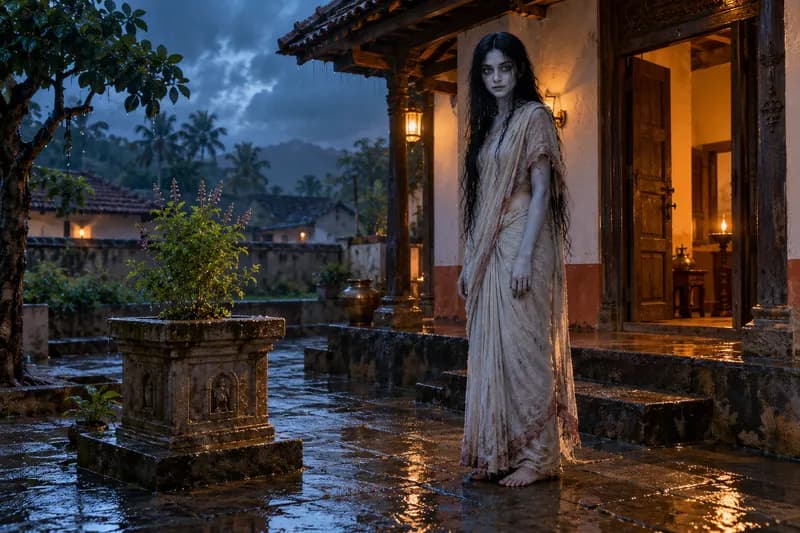
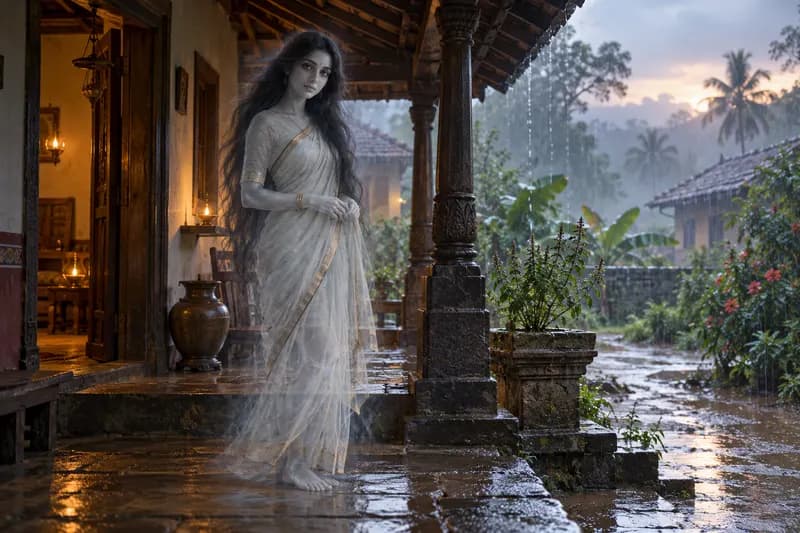
| 👁 Sight | The Bhoot appears as a human figure — often recognizable as the person who died — but with key distortions. The feet are turned backward (the single most consistent detail across all Indian traditions). The body may float slightly above the ground. The skin is pale or ashen, sometimes faintly luminous. In some accounts, it casts no shadow. In others, it is visible only from the corner of the eye and vanishes when looked at directly. |
| 🔊 Sound | The Bhoot calls. It uses the voice of someone you know — a dead relative, a friend, a parent — to lure you outside or make you turn around. This is its most feared ability. A voice calling your name, once, from an empty road at night. Folklore is emphatic: never respond to the first call. Wait for the second. A Bhoot can call only once. A living person will call again. |
| 🍃 Smell | Wet earth. The scent of rain-soaked soil, petrichor, or freshly turned grave-dirt. This smell appears in closed rooms, in dry weather, in places where no rain has fallen. Some traditions describe the smell of marigolds and incense — the scent of a funeral that was never completed. |
| ❄ Temperature | Sudden, localized cold. Not a breeze — a pocket of frigid air in an otherwise warm room. The kind of cold that makes the hair on your forearms stand up. In tropical India, where ambient temperature rarely drops below 20°C, an unexplained chill is taken as direct evidence of a bhoot's presence. |
| ⏰ Time | Most active between midnight and 3 AM — the 'bhoot prahar' (ghost hour). Also dangerous at dusk (sandhya kaal), the transitional moment between day and night. Tuesday and Saturday nights are considered peak activity. Amavasya (new moon) is the most dangerous night of the month. |
| 📍 Habitat | Peepal trees (never cut a peepal tree — you will disturb what lives in it). Crossroads. Abandoned houses (bhoot bangla). Wells and water bodies where drowning deaths occurred. Cremation grounds. The specific spot where the person died — accident sites, murder locations, the room where someone took their life. The Bhoot is territorial; it haunts the geography of its death. |
The Third Call on the Siliguri Road
Ratan Haldar drove a goods truck on the Siliguri–Jalpaiguri highway in North Bengal, and he knew every stretch of that road the way a boatman knows his river. He knew where the surface crumbled near Maynaguri. He knew the blind curve past the tea estate at Kranti. He knew the three kilometers after the Teesta bridge where the fog came down like a wall on winter nights, so thick that his headlights bounced back at him and he drove by the feel of the road under his tires.
He also knew about the woman.
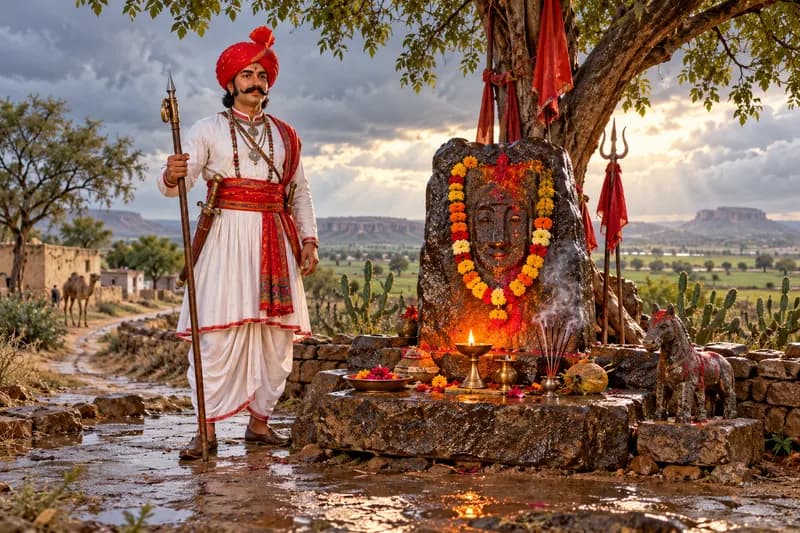
Every truck driver on that route knew about the woman. She stood at the edge of the road near kilometer marker 14, just past the bamboo grove where the highway narrowed before the Jalpaiguri bypass. She wore a white sari. She appeared only after midnight. And she asked for a ride. The drivers who had seen her said she looked ordinary — not frightening, not beautiful, just a woman standing where no woman should be standing at that hour. They said if you stopped, she climbed into the cabin and sat silently. They said she smelled like rain. They said when you looked down at her feet, they were turned the wrong way.
Ratan had driven that route for eleven years and never seen her. He told himself the stories were khisti — truck-driver nonsense, the kind of thing men invent to stay awake on long hauls. His partner Bidhan, who rode with him on the overnight runs, had seen her twice. Both times, Bidhan said, she appeared in the side mirror — standing in the road behind the truck after they had already passed marker 14. Both times, Bidhan did not tell Ratan until morning.
On the night it happened, Ratan was driving alone. Bidhan was sick — a fever that had come on suddenly that afternoon, the kind of fever that old women in their village would have called suspicious. The truck was loaded with jute bales bound for Siliguri, and the road was empty. It was January. The fog was moderate — not the worst he had seen, but enough to close the world down to thirty meters of grey.
He passed kilometer marker 14 at half past one in the morning. He saw nothing. He felt nothing. He drove on.
At marker 16, he heard his mother's voice. She said his name. Just once. 'Ratan.' Clear, unmistakable, as if she were sitting in the passenger seat. His mother had been dead for three years — a heart attack at the ration shop, sudden and complete. He had performed her cremation at Nabadwip ghat. He had immersed her ashes in the Ganga at Triveni Sangam. Every rite had been done correctly. There was no reason for her voice to be in this truck.
He did not respond. He gripped the wheel and stared at the fog. His father had told him the rule when he was seven years old, sitting in the courtyard of their house in Krishnanagar: if you hear a dead person's voice, do not answer the first call. Wait. If the voice comes a second time, it is the person — their spirit has a message. If the voice comes only once, it is a bhoot wearing their voice like a mask, and answering it gives the bhoot permission to enter. Ratan waited. The cab of the truck was very cold. The smell of rain filled the space — thick, loamy, the smell of Bengal earth after the first monsoon downpour. It had not rained in six weeks.
The voice did not come a second time. Ratan drove until dawn broke over the tea gardens east of Siliguri, and the fog burned away, and the road filled with cycle-rickshaws and morning buses and the ordinary noise of the living. He pulled the truck over at a dhaba, ordered two cups of chai, and sat with his hands around the glass until they stopped shaking. He did not drive the Jalpaiguri route at night again for four months.
The Rules — How to Survive
☠ WARNING ☠
Seven rules for surviving a Bhoot encounter
- Never answer the first call. Wait for the second. — A Bhoot can imitate any voice but can call only once. A living person will always call again. Answering the first call gives the Bhoot permission — in some traditions, it allows the spirit to possess you.
- Do not look behind you if you sense a presence on a lonely road at night. — The Bhoot follows at your back. Turning around is acknowledgment — and acknowledgment is invitation. Keep walking. Do not run. Walk steadily until you reach a populated area or a lit threshold.
- Never stand under a peepal tree after sunset. — The peepal (Ficus religiosa) is the Bhoot's preferred dwelling. At night, the tree belongs to them. Standing beneath it — especially alone, especially at crossroads — places you directly in its territory.
- Iron repels. Carry iron or place it at thresholds. — Iron is the single most effective material ward against a Bhoot across virtually all Indian traditions. A horseshoe above a door, an iron nail in your pocket, iron tongs placed crosswise at the entrance to a house — all documented folk protections that remain in use.
- Burn turmeric or neem leaves to cleanse a haunted space. — Turmeric (haldi) and neem have dual significance — they are antiseptic (practical) and purifying (ritual). The smoke of burning turmeric or neem is believed to make a space intolerable for a Bhoot, forcing it to withdraw.
- Complete the funeral rites. This is the only permanent solution. — The Bhoot exists because the death was not properly processed. Performing the antyesti — cremation, ash immersion, shraddha ceremonies — completes the interrupted journey. The soul moves on. The haunting ends. This is not exorcism. It is completion.
- Do not eat food left at crossroads or under trees at night. — Offerings left for bhoots (bali) are placed at crossroads and tree bases. Eating this food — even accidentally — is considered an act of accepting the bhoot's hospitality, which binds you to it. Children are specifically warned about this.
What They Don't Tell You
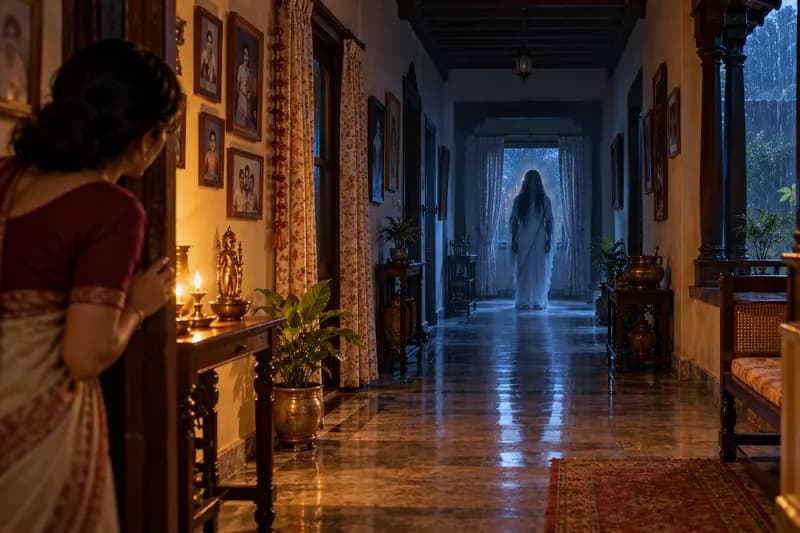
The Bhoot is not a monster. It is a person who got stuck. Every Bhoot was once someone who ate dinner with their family, who had a favorite song, who worried about tomorrow. The real terror of the Bhoot tradition is not supernatural — it is the understanding that any of us could become one. Die in an accident before your time. Die without family to perform your rites. Die alone, unwitnessed, with things left unsaid. The Bhoot is India's way of saying: death is not the worst thing. *An incomplete death is the worst thing.* And the only cure is not violence or exorcism — it is the living finishing what was left undone. Performing the rites. Saying the prayers. Giving the dead the ending they were denied. The Bhoot does not want to haunt you. It wants to stop.
What Does the Bhoot Want?
The Bhoot wants to leave. It cannot.
Unlike entities that choose to haunt — that feed on fear or pursue vengeance as a purpose — the Bhoot is trapped by mechanism, not malice. It haunts the place it died because that is where its journey stopped. It returns to the people it knew because those are the only connections that still hold. It calls out at night because the night is when the boundary between its world and ours is thinnest, and it is trying, desperately, to communicate the one thing it needs: finish what was left undone.
Some Bhoots are angry — the murdered, the betrayed, the suicide. Their rage is real and dangerous. A Bhoot that died violently may attack, possess, or drive people from its territory. But even this anger is not predatory. It is the anger of someone trapped in a burning building, pounding on a locked door. The violence is desperation, not cruelty.
The deepest tradition says that the Bhoot's greatest torment is not being dead. It is being almost dead — able to see the living world, able to hear its own name spoken, able to stand in the room where it once slept, but unable to touch, to eat, to be heard, to rest. The Garuda Purana describes the preta-bhoot state as perpetual hunger and thirst with no ability to consume. Imagine being starving and standing in a kitchen you cannot enter. For decades. That is what the Bhoot wants to stop.

You're Most at Risk If...
- You live in or near a house where someone died an unnatural death
- You are walking alone on a deserted road between midnight and 3 AM
- You are near a peepal or banyan tree after dark, especially at a crossroads
- You are in or near a location where a violent accident, murder, or suicide occurred
- You failed to perform — or improperly performed — funeral rites for a family member
- You are a child, a pregnant woman, or a person in a weakened emotional state (grief, illness, exhaustion) — the Bhoot is drawn to vulnerability

Offerings & Appeasement
| Offering | Purpose |
|---|---|
| Crossroad Offerings (Bali) | Rice, sweets, and flowers placed at a crossroads after dark — the intersection being a liminal space where the Bhoot can access the offering. This is the most common appeasement across all Indian regions. The food is left and the person walks away without looking back. |
| Pind Daan at Gaya | The most powerful remedy. Pind daan — offering rice balls and sesame to the dead — performed at Gaya (Bihar) or Varanasi is believed to release even the most entrenched bhoot. Families travel specifically to Gaya to perform rites for relatives who died badly, believing this alone can complete the interrupted journey. |
| Saturday Offerings | Mustard oil, black sesame seeds, and black cloth offered at a peepal tree on Saturday evenings. Saturday (Shanivar) is associated with Shani and with the dead. These offerings are understood as sustenance for the bhoot — a way to ease its suffering without attempting to remove it. |
| Water and Milk | In many traditions, water or milk is poured at the base of a peepal tree or at the threshold of a haunted house. The logic is the Garuda Purana's description of the bhoot's perpetual thirst — offering water is an act of compassion, reducing the spirit's agitation enough that it stops disturbing the living. |
The Healer
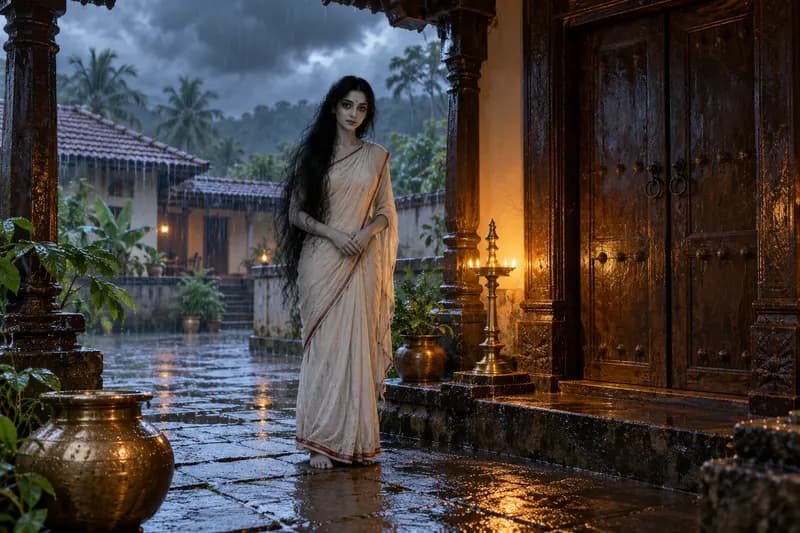
Ojha / Gunia (Village Exorcist) — Found in every region under different names — ojha in Bihar and Bengal, gunia in Odisha, bhagat in Gujarat. The village-level specialist who identifies whether a bhoot is present, determines what it wants, and either appeases it or drives it away using mantras, fumigation (dhoop), and iron implements. This is the front line of bhoot management across India.
Purohit / Family Priest — When the bhoot is a known family member — a relative who died badly — the family priest performs the missing or incomplete funeral rites. Shraddha ceremonies, pind daan, and tarpan (water offerings to ancestors) are conducted to complete the interrupted journey. This is considered the most effective and permanent solution.
Tantrik — For aggressive or entrenched bhoots that do not respond to standard appeasement, a tantrik practitioner may be called. Tantrik methods include binding the spirit into an object (a lemon, a coconut, a bottle), commanding it with specific mantras, or redirecting it to a cremation ground. This is considered a last resort — the spiritual equivalent of surgery.
Peer / Sufi Healer — In Muslim communities and syncretic traditions, Sufi healers (peers) address bhoot-like entities using Quranic recitation, taweez (protective amulets), and dam (blowing blessed breath). The cross-religious nature of bhoot belief means that Hindu and Muslim healing traditions have extensively borrowed from each other in this domain.
What If You Dream of a Bhoot?
| Symbol | Meaning | |
|---|---|---|
| 🌑 | A Faceless Figure in Your House | An unresolved presence in your personal life — a relationship you ended without closure, a debt unpaid, a wrong unacknowledged. The faceless bhoot in your home is your conscience wearing the shape of the thing you left unfinished. |
| 📞 | A Dead Person Calling Your Name | In folk interpretation, dreaming that a deceased person calls you is a direct communication. If the dead person is a relative, they may need rites performed — a shraddha missed, a promise unfulfilled. This dream is taken literally in most Indian households and acted upon. |
| 🌳 | Standing Under a Peepal Tree at Night | You are in a liminal space in your waking life — between decisions, between phases, between who you were and who you are becoming. The peepal tree in a dream represents the threshold. What you see in its branches tells you which side you are moving toward. |
| 👣 | Backward Feet | You are going in the wrong direction. Something in your life is reversed — a relationship that should have ended continues, a path you are walking leads away from where you need to be. The backward feet are the oldest symbol of the bhoot, and in dreams they mean exactly what they mean in folklore: something is fundamentally turned around. |
The Bhoot in Art History
Vedic Period — Ritual Texts (c. 1000 BCE): The earliest references to bhūta as a category of restless dead appear in the Atharva Veda's hymns for protection against malevolent spirits. These are not narrative — they are functional, prescriptive texts designed to ward off specific threats. The bhoot enters documented history not as a story but as a problem to be solved.
Medieval Miniature Paintings (15th–18th Century): Rajasthani, Pahari, and Mughal miniature traditions depict bhoot-like spirits as pale figures hovering near cremation grounds, often shown with reversed feet and disheveled hair. In illustrated manuscripts of the Garuda Purana, the preta-bhoot state is depicted with haunting specificity — emaciated forms reaching for food they cannot grasp.
Bengali Pata Painting & Scroll Art: The patachitra tradition of Bengal includes narrative scrolls depicting encounters with bhoots — particularly the stories of Thakurmar Jhuli and regional folk tales. These folk paintings show bhoots in domestic settings — appearing in doorways, standing under trees, hovering near ponds — emphasizing their closeness to everyday life rather than their otherness.
Colonial-Era Illustrations (19th Century): British administrators and ethnographers in India documented bhoot beliefs with illustrations — sometimes sympathetic, often condescending. Reverend Lal Behari Day's Folk-Tales of Bengal (1883) and William Crooke's Religion and Folklore of Northern India (1896) contain some of the earliest English-language visual documentation of bhoot imagery, filtered through colonial interpretation but preserving authentic folk detail.

Cross-Regional Patterns
Churel · Pret · Nishi · Pishaach · Shakchunni
| Dawn as hard limit | Yes — weakens at dawn, disperses at sunrise |
| Iron weakness | Yes — strong and universal |
| Tree-dwelling | Yes — especially peepal and banyan |
| Counting compulsion | Regional — some Bengali traditions only |
| Backward feet | Yes — the defining physical marker |
Global Equivalent: The Bhoot maps most closely to the Western concept of a 'ghost' or 'revenant' — the spirit of a dead person who cannot rest. Parallels include the Japanese Yūrei (spirits bound by unfinished business), the Chinese Guǐ (hungry ghosts from improper burial), and the European Revenant (the returning dead). But the Bhoot is distinguished by its mechanical specificity — Indian tradition provides exact rules for why it forms, how long it lasts, and how to end it. Western ghosts are mysteries. The Bhoot is a diagnosis.
In Culture — Movies, Books, Games
| Type | Title | Description |
|---|---|---|
| Film | Bhool Bhulaiyaa (2007 / 2022) | Akshay Kumar's psychological horror-comedy brought bhoot possession into Bollywood mainstream. The sequel doubled down on commercial horror. Both films, despite their comedic framing, draw on authentic possession tropes — the voice change, the personality shift, the connection to a specific death and unfinished grievance. |
| Film | Stree (2018) | Set in Chanderi, Madhya Pradesh, Stree draws on the real local legend of a vengeful female spirit. The film captures something authentic: a small town's genuine, daily negotiation with the supernatural — warnings painted on walls ('O Stree, Kal Aana'), doors left open, a community that has integrated fear into its routine. |
| Television | Aahat & Zee Horror Show (1990s–2000s) | The twin pillars of Indian horror television. A generation of Indians formed their understanding of bhoots from these shows — low-budget, high-atmosphere episodic horror that drew directly from regional folk traditions. The woman in white, the peepal tree, the midnight crossroads — these shows codified the visual grammar of the Indian ghost. |
| Literature | Thakurmar Jhuli — Dakshinaranjan Mitra Majumdar (1907) | The grandmother's bag of stories — Bengal's most beloved folk collection, dense with bhoot encounters. These are not horror stories. They are household stories, told to children at bedtime, normalizing the supernatural as part of the fabric of Bengali life. The bhoots in Thakurmar Jhuli are neighbors, not monsters. |
| Children's Culture | Bhoot Bangla (The Haunted House) | The concept of the bhoot bangla — the haunted house — is so embedded in Indian childhood that it has become its own genre. Every Indian town has its bhoot bangla. Every child has been dared to approach one. The phrase has entered Hindi as a common noun, used for any dilapidated, abandoned structure. It is arguably the single most universal piece of Indian supernatural vocabulary. |
ACCURACY RATING: HIGH IN FOLK TRADITION · COMMERCIALLY DILUTED IN MODERN MEDIA
Is the Bhoot Still Real?
- The Bhoot is the most believed-in supernatural entity in India. Surveys consistently show that a majority of Indians — across education levels, across urban and rural divides — report belief in ghosts. When they say 'ghost,' they mean bhoot.
- In rural India, bhoot belief is not belief in the Western sense — it is knowledge. Villages have specific bhoots with known histories: 'That is where Ramesh drowned in 1987; he is still there.' The bhoot is a neighbor who happens to be dead.
- Urban India has not abandoned the Bhoot — it has relocated it. The bhoot bangla is now the haunted flat. The crossroads encounter is now the late-night Uber ride through an empty stretch. Ghost stories circulate on WhatsApp groups and Instagram reels with the same urgency they once had around village fires.
- The funeral-rite connection remains operationally active. Families across India spend significant resources ensuring proper antyesti precisely because the alternative — a relative becoming a bhoot — is considered a real and present risk. The threat of becoming a bhoot disciplines the living into caring for their dead.
- Nale Ba — the mass bhoot panic that swept Karnataka in the 1990s — demonstrates that collective bhoot belief can still mobilize entire cities. Residents wrote 'Nale Ba' (come tomorrow) on their doors to trick a spirit believed to knock at night and kill those who answered. An entire urban population participated in a coordinated anti-bhoot defense.
- The psychiatric and medical communities in India regularly encounter patients whose families attribute symptoms to bhoot possession. Whether the bhoot is 'real' is less relevant than the fact that it remains a primary explanatory framework for mental distress, sleep paralysis, and dissociative episodes across the country.
Expert & Academic Context
- Garuda Purana (medieval Sanskrit text) — The most systematic Hindu text on death, afterlife, and the intermediate states of the soul. Provides detailed descriptions of the preta and bhoot states, including the mechanisms by which improper death or failed rites produce restless spirits. Essential primary source for understanding the theological framework behind bhoot belief.
- William Crooke — Religion and Folklore of Northern India (1896) — Colonial-era ethnographic study documenting bhoot beliefs across North India. Despite its period biases, remains one of the most detailed English-language surveys of regional ghost traditions, protection methods, and village-level interactions with the supernatural.
- Lal Behari Day — Folk-Tales of Bengal (1883) — Early collection of Bengali folk stories including numerous bhoot encounters. Significant as one of the first attempts by an Indian author to document oral folk traditions in English. The bhoot stories here are told from inside the tradition, not as anthropological specimens.
- Dakshinaranjan Mitra Majumdar — Thakurmar Jhuli (1907) — The foundational Bengali folk collection, widely considered the Bengali equivalent of the Brothers Grimm. Dense with supernatural beings, including multiple categories of bhoot. Reveals how deeply bhoot belief is woven into domestic storytelling and childhood socialization.
- Sudhir Kakar — Shamans, Mystics and Doctors (1982) — Psychoanalytic anthropologist Sudhir Kakar's study of traditional healing in India, including detailed accounts of bhoot possession and exorcism as observed at healing shrines. Bridges the gap between folk belief and clinical observation without dismissing either framework.
- Rakesh Khanna — Ghosts, Monsters and Demons of India — Modern comprehensive reference documenting Indian supernatural entities across regional traditions. Provides cross-regional comparison of bhoot beliefs, variant names, and the relationship between the generic bhoot category and more specialized entities like churel, nishi, and shakchunni.
The Bhoot occupies a unique position in Indian supernatural taxonomy: it is simultaneously the most feared and the most pitied entity. Unlike the Vetala (cosmic intelligence), the Churel (gendered vengeance), or the Rakshasa (demonic power), the Bhoot is fundamentally ordinary — a regular person whose death went wrong. This ordinariness is the source of both its terror and its cultural power. The Bhoot tradition functions as a social technology: it enforces funeral rites (perform them or face consequences), it processes grief (the dead are not gone, they are nearby), it explains the unexplainable (sleep paralysis, strange sounds, sudden chills), and it maintains a relationship between the living and the dead that most modern societies have severed. The Bhoot is India's refusal to let death be final — and its insistence that the living owe the dead a completed ending.
If You Encounter a Bhoot
Frequently Asked Questions
▶What is a Bhoot?
A Bhoot is the restless spirit of a person who died an unnatural, untimely, or violent death — or whose funeral rites were not properly completed. It is the most common ghost in Indian folklore, found across every region, language, and community in the subcontinent. The word 'bhoot' is the default Hindi/Sanskrit term for ghost.
▶How do you know if a Bhoot is nearby?
Traditional signs include: a sudden unexplained chill in a warm room, the smell of wet earth when it hasn't rained, hearing your name called once from an empty place, seeing a figure with feet turned backward, a feeling of being watched in an empty house or near a peepal tree after dark. The bhoot prahar (ghost hour) between midnight and 3 AM is considered the peak activity window.
▶Why do Bhoots have backward feet?
The backward feet are the single most consistent identifying feature of a Bhoot across all Indian traditions. Symbolically, the reversed feet represent the reversal of the natural order — the dead walking where the living should, moving in the wrong direction, unable to proceed forward on their soul's journey. Practically, folk tradition says checking someone's feet is how you identify a Bhoot disguised as a living person.
▶Can a Bhoot possess a living person?
Yes. Bhoot possession (bhoot lagna / bhoot chadna) is widely attested in Indian folk tradition. Symptoms include sudden personality change, speaking in a different voice, superhuman strength, aversion to religious symbols, and knowledge the person shouldn't possess. Possession is more likely when a person is emotionally or physically weakened — during grief, illness, or extreme exhaustion.
▶How do you get rid of a Bhoot?
The permanent solution is completing the interrupted funeral rites — cremation, ash immersion, shraddha ceremonies, pind daan. Temporary protections include iron objects at thresholds, burning turmeric or neem, Hanuman Chalisa recitation, and salt circles. For possession cases, a village ojha or tantrik may be needed. For ancestral bhoots, pind daan at Gaya (Bihar) is considered definitive.
▶What is a Bhoot Bangla?
Bhoot Bangla literally means 'ghost house' — any abandoned or dilapidated building believed to be haunted. The term has become so common in Hindi that it functions as a generic noun for any creepy, deserted structure. Most Indian towns have at least one locally identified bhoot bangla, complete with specific stories about who died there and what has been seen since.
Explore More
Related Spirits
Churel · Pret · Nishi · Pishaach · Shakchunni
Explore Further
Comparisons
Stories Are Being Summoned
One ghost story per week. Every Tuesday at midnight.